FlexGuard Official Website › Testing & Quality
Testing & QualityFlexGuard Testing And Quality: What The Four Seals Establish
Four seals ship with this pack and none of them is a test result.
An FDA-registered facility roundel, a Good Manufacturing Practice seal, a foreign and domestic ingredients seal and a money-back satisfaction seal. Three describe how or where the product was made and one describes the sale. This page says what each claims, and what none of them claims.
A seal audit rather than a seal display, including the sentence most supplement pages avoid printing.
The four seals on the FlexGuard pack
Four marks, four descriptions, and a pattern across all of them.
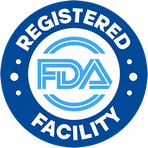 FDA-registered facilityThe agency knows the factory exists and may inspect it. Registration is a requirement, not an endorsement, and it says nothing about this product.
 GMPA standard for how a facility documents and controls its process, including identity, purity and strength testing during manufacture. Process, not product.
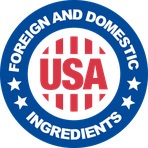 Foreign and domesticThe fuller version of the made-in line, which reads: manufactured in the USA with globally sourced ingredients. Assembly here, materials from wherever.
 60-day satisfactionA purchase policy, not a quality mark. It describes what happens if you want your money back rather than anything about the capsule.
Read those four descriptions together and a pattern appears: three are about the conditions of manufacture and one is about the transaction. None is a laboratory result, and none of them would be different if the formula were different.
That is not a criticism of this pack. It is how supplement seals work, across the whole category, and the useful thing a website can do is say so rather than arrange them in a row and let them imply something.
There are four of them and none contradicts the label. That is not universal: packs in this category routinely carry a vegetarian mark over a gelatin capsule or a claim the panel cannot support. Here the made-in seal matches the made-in line, and the satisfaction seal matches the published window.
FlexGuard is not FDA approved, and no supplement is
One sentence most pages in this category will not print.
This sentence belongs on every page like this one and appears on almost none of them, so here it is plainly: dietary supplements are not approved by the Food and Drug Administration before they go on sale, and this product is not FDA approved.
What the law requires is that a manufacturer is responsible for the safety of what it sells and for the truthfulness of what it says about it. The FTC’s health products compliance guidance sets out the advertising half of that, including what a seller has to be able to substantiate before making a claim.
A registered facility, a GMP seal and a made-in line are the things that do exist. They are meaningful and they are not approval. Any website that lets a roundel with the letters FDA on it imply otherwise is relying on a reader not looking closely.
The same reasoning governs the rest of this site. No page here claims a clinical trial of this formula, because none exists. No page claims a certificate of analysis, because this desk does not hold one.
These statements have not been evaluated by the Food and Drug Administration. This product is not intended to diagnose, treat, cure or prevent any disease.
What a better-documented FlexGuard would look like
Four gaps, stated once, in the section whose job it is to state them.
| What exists now | What would be stronger | Why it would matter |
|---|---|---|
| A lot code and a certificate reference | A published certificate of analysis, dated, naming the laboratory | It would move identity and strength from a claim to a document |
| A GMP seal | The certifying body named, with a certificate number | GMP is certified by several bodies to different standards, and the name is the difference |
| Eight printed amounts | An extract ratio for the boswellia and the turmeric | Two rows could then be compared exactly with their trials rather than indicatively |
| A made-in-the-USA line with globally sourced ingredients | Country of origin for the glucosamine specifically | It is the largest row on the panel and the one with an allergen attached |
Four things this desk would rather be able to publish. None of them is a criticism of the product's safety; each is a gap between what is claimed and what is documented.
Printing that table is more useful than printing four seals at a larger size. A buyer comparing two joint capsules can ask all four questions of both bottles, and the answers will separate them faster than anything on a front label. Only the first column is required by the federal labelling rule; the rest is what a manufacturer chooses to volunteer.
On the third row this product does better than most of its category. Eight printed amounts is the reason the ingredients page can exist at all, and a great many competitors publish a blend total instead.
What GMP actually governs, on a FlexGuard bottle and on any other
One standard, explained properly, because it is the one most often over-interpreted.
Good Manufacturing Practice for dietary supplements is a set of requirements about how a facility runs: written procedures, identity testing of incoming materials, controls on the process, records of what was made when, and a system for handling complaints.
That is a real and useful standard, and a facility that meets it is meaningfully different from one that does not. What it is not is a test of the bottle in your hand. A GMP facility can manufacture a product whose formula is poorly chosen, correctly and repeatably.
The practical consequence for a buyer is that a GMP seal answers the question was this made carefully, and it does not answer the question is this worth taking. Those are different questions and only the second one is about the panel.
The second detail worth knowing is that GMP is certified by several different bodies to different standards, and a seal that names none of them is telling you less than a seal that names one. This pack's does not name one.
Who says so, and what did they test. A seal that answers both is worth something. A seal that answers neither is a graphic. That test applies to every mark on every bottle in this category, including the four on this one.
What this desk can and cannot tell you about FlexGuard quality
Seven questions, answered including the three answered no.
| Question | Answer |
|---|---|
| Was it made in a registered facility | The pack's seal says so |
| Is the facility GMP | The pack's seal says so; the certifying body is not named |
| Was this batch independently tested | This desk holds no independent certificate and does not claim one |
| Are the printed amounts verified by assay | Not by any document this desk holds |
| Is the allergen declaration accurate | It is the manufacturer's declaration, and it matches what glucosamine is made from |
| Is the product FDA approved | No. No dietary supplement is |
| Can a bottle be traced to a batch | Yes, by lot FLE-26/FL-2166, for bottles shipped from this desk |
Seven questions with short answers, three of which are no. A quality page that could not print a no would not be worth reading.
Everything above is checkable against the pack, the label and this website. Nothing above is a claim this desk invented, and the three negative answers are the ones that would be quietly omitted on a page designed only to sell.
FlexGuard quality: short answers
Is FlexGuard FDA approved?
No. No dietary supplement is. The FDA does not approve supplements before they are sold, and any product claiming otherwise is misrepresenting the law.
What does FDA-registered facility mean?
That the agency knows the factory exists and can inspect it. It is a statement about the building, not about this product.
Is it third-party tested?
This desk holds no independent certificate of analysis for this product and does not claim one. The seals on the pack are manufacturing and sourcing claims.
What does GMP mean?
Good Manufacturing Practice: a standard for how a facility documents and controls its process. It governs the process rather than testing the bottle.
Who publishes this FlexGuard website?
- Federal Trade Commission. Health Products Compliance Guidance. December 2022. https://www.ftc.gov/business-guidance/resources/health-products-compliance-guidance
- Code of Federal Regulations, Title 21, Section 101.36: Nutrition labeling of dietary supplements. Office of the Federal Register. https://www.ecfr.gov/current/title-21/chapter-I/subchapter-B/part-101/subpart-G/section-101.36
What is documented about FlexGuard is on this page
Four seals, a lot code, a certificate reference and eight printed amounts. Sixty days from purchase to change your mind.
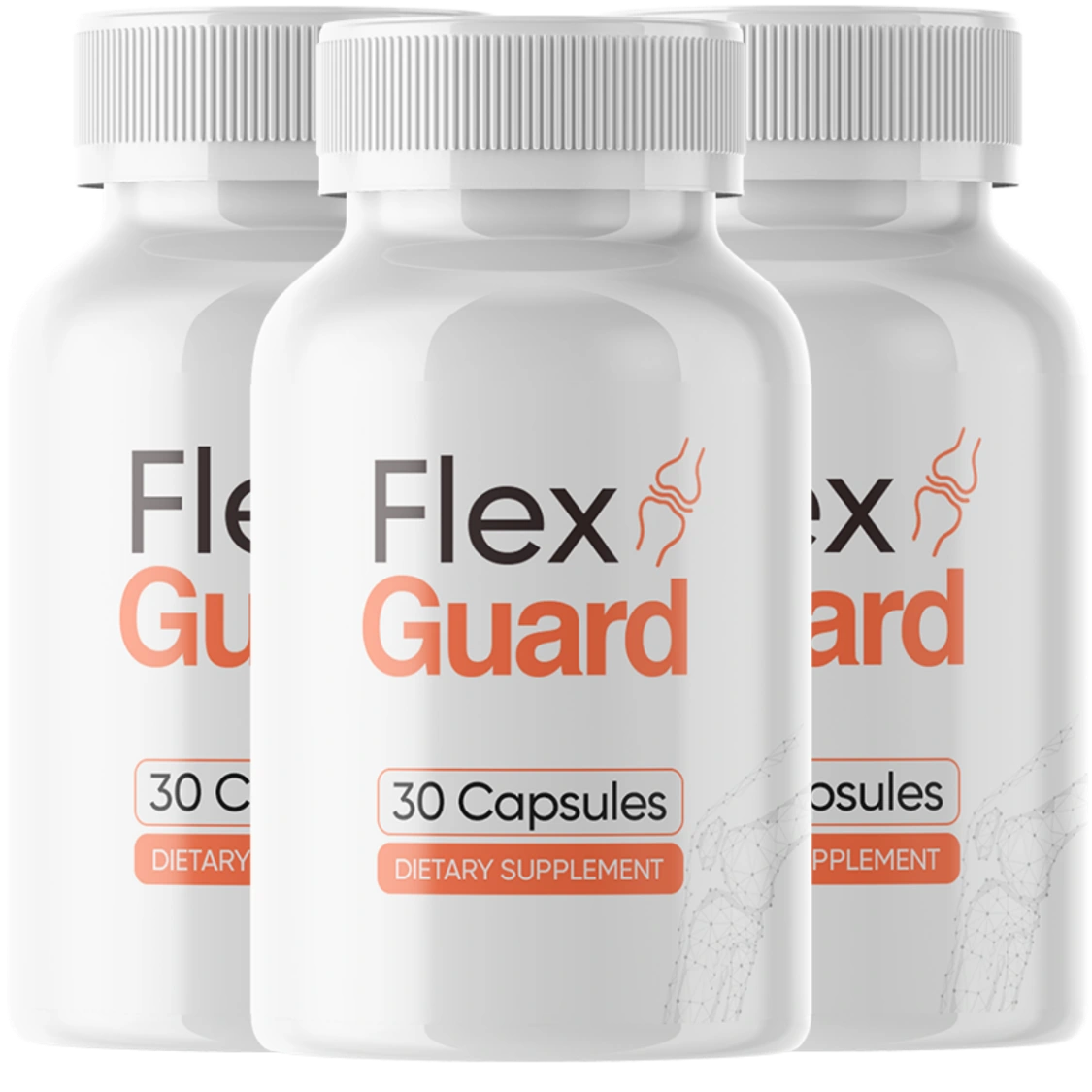
Two bottles $158 · six bottles $294 · 60 days from purchase
Order FlexGuard On The Official WebsiteOne capsule a day · 30 per bottle · lot FLE-26/FL-2166