FlexGuard Official Website › Results Timeline
Results TimelineFlexGuard Results: How Long It Takes, Week by Week
FlexGuard is slow to show results, with a typical wait of 3 to 6 weeks.
Studies on these ingredients ran over eight to twelve weeks. The 60-day guarantee from purchase is long enough for a fair test.
What the research measured, when buyers report something, and how to tell the difference between the two.
The FlexGuard timeline, set against what the trials measured
Five rows, and the middle column is the one that sets the expectation.
| When | What the published trials measured | What buyers report |
|---|---|---|
| Week 1 | Nothing. No trial in this literature reported at one week, because nothing here is an analgesic. | Reviews from this period are about the routine rather than an effect. |
| Week 2 to 4 | The earliest measurement points in the boswellia work, at 100 to 250 mg a day of a concentrated extract. | Where the complaints cluster. Wanting more in week one is the single most common criticism in this whole category. |
| Week 4 to 8 | The span most of these trials used. The turmeric meta-analysis drew on eight to twelve week studies; the 5-Loxin trial ran ninety days. | The distributor's stated typical wait of 3–6 weeks falls here. |
| Week 8 to 12 | Where the glucosamine and chondroitin trials took their primary readings. GAIT measured at twenty-four weeks; the chondroitin review pooled studies of varied length. | Reorders cluster at the end of a second or third bottle. |
| Month 3 and beyond | The three-year glucosamine trial was asking a different question over a different timescale, at 1,500 mg a day. | Also past the guarantee, which is the argument for starting the clock on the date of purchase. |
The middle column is what published trials measured for these ingredients at their own doses. It is not a prediction about this capsule, which carries smaller amounts and has not been trialled.
Two things follow from that table. The first is that a first-week verdict is meaningless. The second is that a sixty-day window is, for once, roughly the right length for the category it belongs to.
Why FlexGuard is a slow category, mechanically
Three reasons nothing here can be fast, and one thing that is not slower.
Cartilage has no blood supply. It is fed by fluid moving in and out of the tissue as a joint is loaded and unloaded, which is one reason movement matters so much and one reason nothing reaches it quickly.
The plant rows work on signalling rather than on structure, and signalling changes are measured over weeks in every trial that has looked at them. None of these ingredients blocks a pain signal the way a tablet from a pharmacy shelf does.
So a capsule in this category has no fast mechanism available to it. A product that promised a difference in three days would be promising something its own ingredients cannot deliver, which is a useful test to apply to any joint supplement advertisement.
The corollary is the one people like less: a slow mechanism needs a long and uninterrupted trial to be judged at all, and most people do not run one.
The Cochrane review of exercise pooled fifty-four trials and found land-based exercise improved pain and physical function in knee osteoarthritis, with the benefit visible over similar timescales. It costs nothing and it is in the same evidence base, which is why this desk mentions it on the page about waiting.
How to run a fair sixty days on FlexGuard
Five steps, built around the refund window rather than around the bottle.
Start the clock on the purchase date
The window opens the day you pay, and the checkout confirmation carries the date. Write it on the bottle.
Measure two things before the first capsule
Minutes of morning stiffness, and the distance walked before you notice a joint. Both on a phone, both today. A memory of July is not a measurement.
Change nothing else for four weeks
A capsule, a new pair of shoes and a walking habit started in the same week produce an unreadable result. Add one thing at a time, and if you are adding exercise, add that first because it has the better evidence.
Take the same two measurements at week four
Not a verdict, a checkpoint. Four weeks is early for this category and the point of the reading is to have a middle number rather than only two ends.
Decide at week eight, inside the window
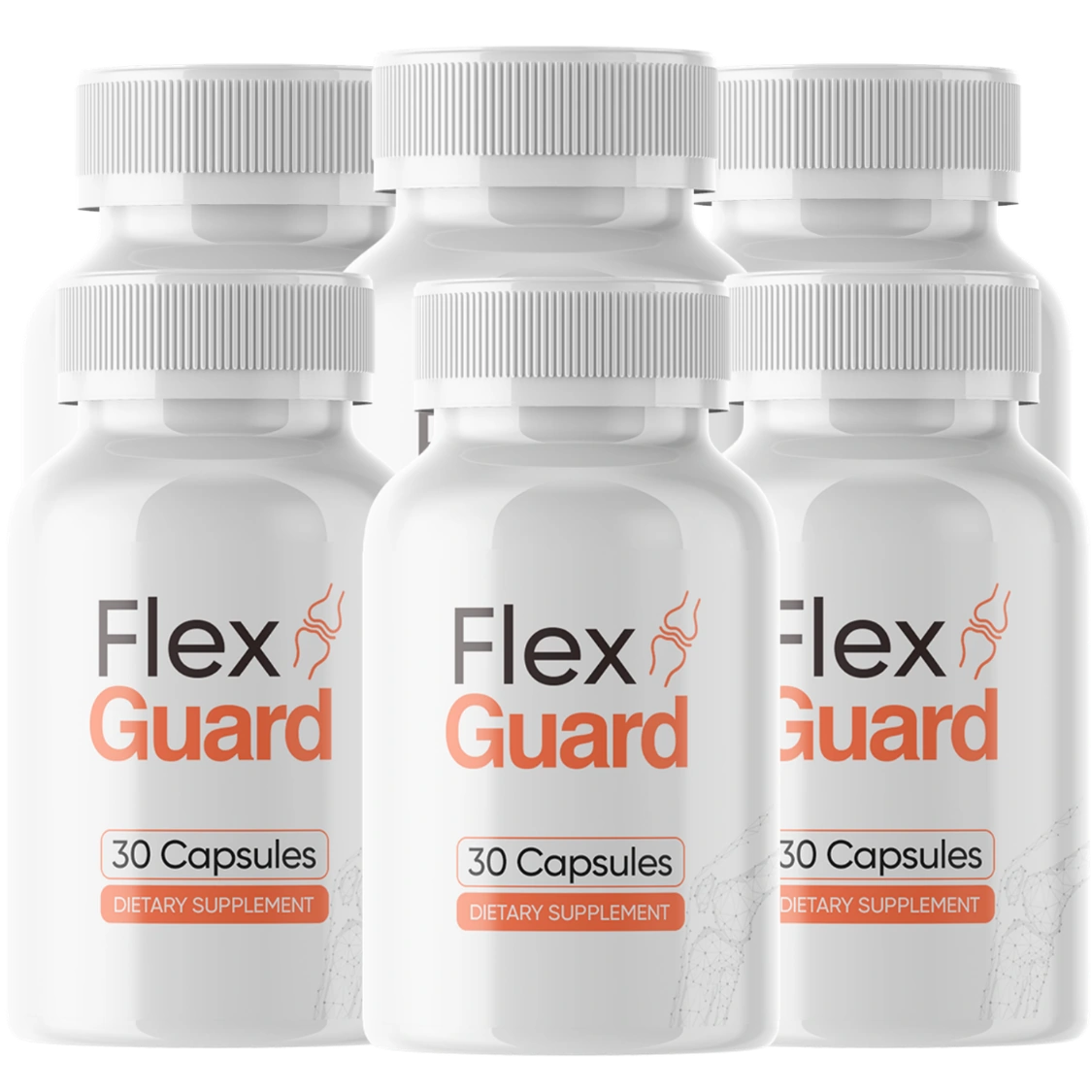
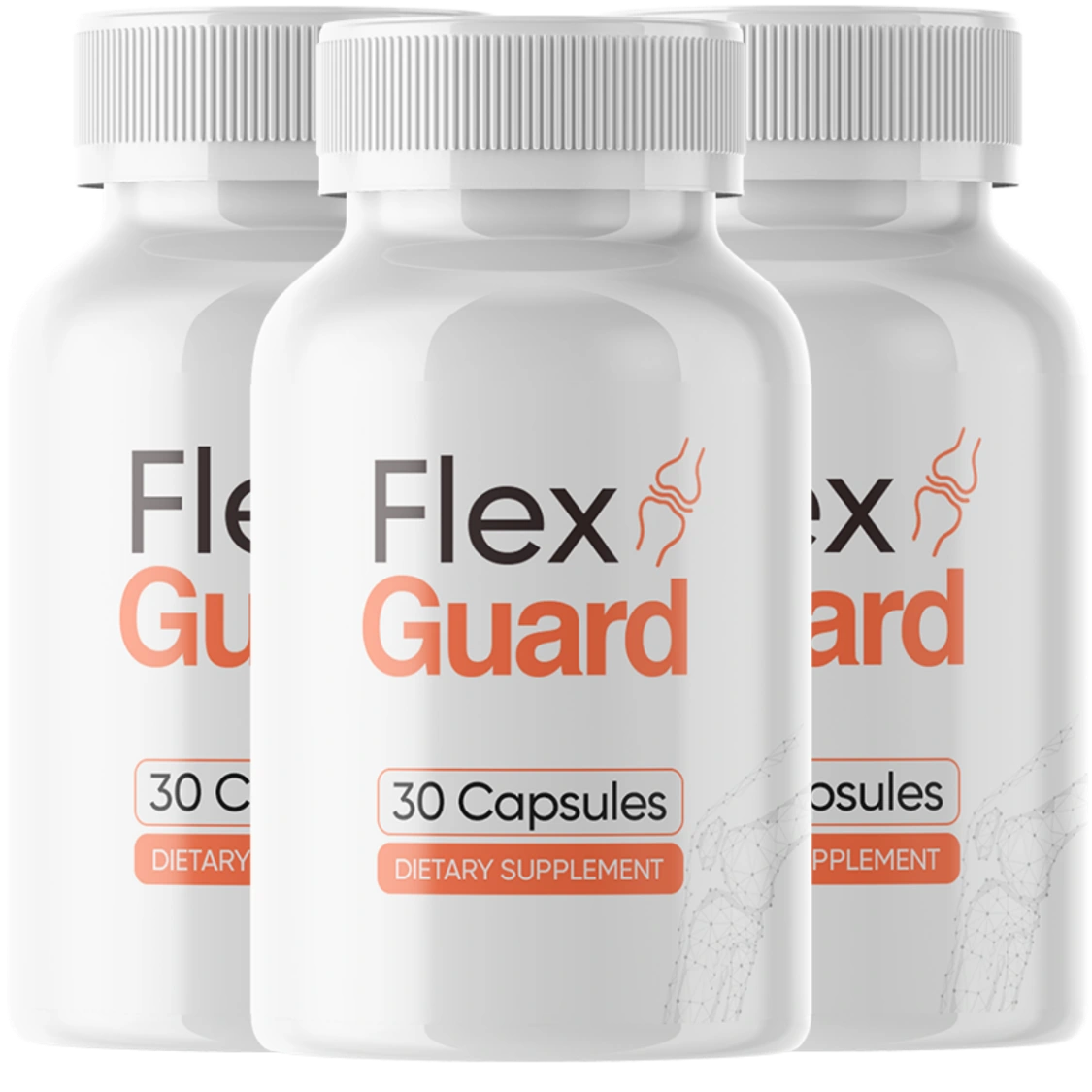
Day 60 from purchase is the deadline. Two bottles runs close to it and three bottles leaves a month of margin. The pricing page sets that out against the packs.
That routine takes about four minutes in total across two months, and it is the difference between an answer and an impression.
When to stop taking FlexGuard
Five points to stop, and one of them is simply not wanting to continue.
- Immediately, for any rash, swelling or difficulty breathing. The panel declares shellfish.
- Within the first week, if stomach upset persists after trying the capsule with food.
- At any point, if joint pain worsens rather than improves. That is a reason to be examined, not to change product.
- At week eight, if both of your measurements are unchanged and you would rather have the money. The window is still open if the clock started right.
- At the end of a bottle, if you simply do not want to keep taking it. No tapering is needed and nothing on this panel produces a rebound.
There is no course to complete and no advantage to finishing a bottle you have decided against. Stopping is not a failure of discipline; for a supplement at these amounts it is often the right answer, and the refund window exists so that the decision costs nothing.
FlexGuard timeline: short answers
How long before FlexGuard does anything?
The distributor puts the typical wait at 3–6 weeks. Nothing on this panel acts quickly, and the trials behind these ingredients ran over months at larger amounts.
Should I take more to speed it up?
No. The label says one capsule a day and not to exceed it. Doubling would still leave the glucosamine below its trial amount and would double seven rows nobody has studied.
When should I decide whether to keep going?
Measure at week four, decide before day sixty counted from the day you paid. Two bottles runs close to that day.
Is a six-bottle pack a better test?
Not as a test. Four of its six months fall outside the refund window, so it is a commitment rather than a trial.
Who publishes this FlexGuard website?
- Sengupta K, Alluri KV, Satish AR, et al. A double blind, randomized, placebo controlled study of the efficacy and safety of 5-Loxin for treatment of osteoarthritis of the knee. Arthritis Res Ther. 2008;10(4):R85. PMID 18667054. https://pubmed.ncbi.nlm.nih.gov/18667054/
- Daily JW, Yang M, Park S. Efficacy of turmeric extracts and curcumin for alleviating the symptoms of joint arthritis: a systematic review and meta-analysis of randomized clinical trials. J Med Food. 2016;19(8):717-29. PMID 27533649. https://pubmed.ncbi.nlm.nih.gov/27533649/
- Clegg DO, Reda DJ, Harris CL, et al. Glucosamine, chondroitin sulfate, and the two in combination for painful knee osteoarthritis. N Engl J Med. 2006;354(8):795-808. PMID 16495392. https://pubmed.ncbi.nlm.nih.gov/16495392/
- Singh JA, Noorbaloochi S, MacDonald R, et al. Chondroitin for osteoarthritis. Cochrane Database Syst Rev. 2015;1(1):CD005614. PMID 25629804. https://pubmed.ncbi.nlm.nih.gov/25629804/
- Reginster JY, Deroisy R, Rovati LC, et al. Long-term effects of glucosamine sulphate on osteoarthritis progression: a randomised, placebo-controlled clinical trial. Lancet. 2001;357(9252):251-6. PMID 11214126. https://pubmed.ncbi.nlm.nih.gov/11214126/
- Fransen M, McConnell S, Harmer AR, et al. Exercise for osteoarthritis of the knee. Cochrane Database Syst Rev. 2015;1(1):CD004376. PMID 25569281. https://pubmed.ncbi.nlm.nih.gov/25569281/
Give FlexGuard the sixty days the window allows
One capsule a day, thirty to a bottle, and a refund window counted from the date of purchase.
Two bottles $158 · six bottles $294 · 60 days from purchase
Order FlexGuard On The Official WebsiteOne capsule a day · 30 per bottle · lot FLE-26/FL-2166