FlexGuard Official Website › Joint Supplement Guide
Joint Supplement GuideThe Joint Supplement Guide: What Is Actually In These Bottles
Four families of ingredient turn up in nearly every joint capsule sold.
Cartilage components, plant anti-inflammatories, sulfur compounds and collagen. Each has its own research, its own typical dose and its own way of being under-delivered on a label. This guide covers all four, the amounts their trials used, and how to read a panel that does not print them.
Written to be useful whichever bottle you end up buying, including one that is not sold on this website.
Family one: the cartilage components
Two ingredients, the largest evidence base in the category, and the least agreement about what it shows.
Glucosamine and chondroitin sulfate are the oldest idea in this category and the most tested. Both are constituents of cartilage, and the proposition is that supplying them supports the tissue that carries load.
The evidence is large and genuinely disputed. The NIH-funded GAIT trial randomised 1,583 people to glucosamine at 1,500 mg a day, chondroitin at 1,200 mg, both, an anti-inflammatory or placebo, and neither supplement arm separated significantly from placebo overall. The Cochrane review of glucosamine found the result depended on which preparation was tested, and the Cochrane review of chondroitin found a small pain benefit at low quality of evidence across forty-three trials.
Two clinical guidelines have since looked at the whole pile. The 2019 American College of Rheumatology guideline recommends against glucosamine for knee, hip and hand osteoarthritis, and the 2019 OARSI guidelines decline to endorse it for symptom relief.
What that means for a label: if a bottle carries glucosamine, the amount to look for is 1,500 mg a day, and if it carries chondroitin, 800 to 1,200 mg. Anything far below those is untested rather than tested and found wanting.
Most commercial glucosamine is made from crustacean shell, so a bottle carrying it usually declares shellfish. A controlled challenge in shrimp-allergic adults found no reactions, because the allergen is a muscle protein rather than anything in the shell. The declaration still governs, and it also means a glucosamine product is rarely vegan whatever its capsule is made of.
Family two: the plant anti-inflammatories
Five botanicals, and the difference between root and extract decides most of them.
Boswellia, turmeric, bromelain, quercetin and ginger turn up across this category on the strength of their effects on inflammatory signalling rather than on cartilage structure.
Boswellia has the most direct joint trial record of the group. A 2003 crossover trial used 333 mg three times a day and reported less knee pain and greater walking distance, and a 90-day trial of an extract standardised to 30 per cent AKBA reported improvements at 100 mg and 250 mg a day. NCCIH describes the field as small and uneven, which is fair.
Turmeric is the one most often mis-sold, and the mis-selling is mechanical rather than dishonest. Curcuminoids are a few per cent of turmeric root by weight and the great majority of a standardised extract, so 500 mg of root and 500 mg of extract are different products. The joint meta-analysis drew on trials using around 1,000 mg a day of curcuminoids, and a 367-person trial used 1,500 mg a day of a standardised extract.
Bromelain's clinical work, collected in a review of the osteoarthritis studies, runs in the hundreds of milligrams a day, and quercetin's supplement literature, surveyed in a German federal safety review, runs from 250 mg upward.
| Plant row | Look for | The tell that it is decorative |
|---|---|---|
| Boswellia serrata | 100 to 250 mg of a standardised extract, AKBA named | A weight with no extract ratio and no standardisation |
| Turmeric | 1,000 mg a day of curcuminoids from a standardised extract | The word root, or a three-figure milligram amount with no percentage |
| Bromelain | Hundreds of milligrams, or an activity figure in GDU | A two-figure milligram amount and no activity unit |
| Quercetin | 250 mg a day and upward | Single-figure milligrams |
| Ginger | 500 to 1,000 mg a day of extract | A garnish amount in a long ingredient list |
The right-hand column is the useful one. Every row in it describes a way a label can name a researched ingredient while supplying an amount nobody studied.
Family three: the sulfur compounds, and the one people confuse
Two rows that look similar, one of which has a trial base and one of which does not.
MSM is the sulfur compound that actually appears in joint trials, always in grams. A 2006 pilot used 3 g twice a day, a 2011 randomised study used 1.125 g three times a day, and a 2017 review describes a literature running from about 1.5 g to 6 g a day. A joint capsule carrying MSM in milligrams is carrying a name rather than a dose.
Methionine is the one that causes confusion. It is an essential amino acid, supplied in hundreds of milligrams by ordinary dietary protein, and it is the precursor the body converts into SAMe. It is SAMe that has a joint meta-analysis behind it, at around 1,200 mg a day, and SAMe is a different compound sold separately and at a different price.
Collagen is the fourth family and it sits slightly outside this guide's evidence set, because most joint collagen trials use type II collagen at 40 mg a day and the products sold most heavily are hydrolysed type I and III at ten grams. Those are different propositions with the same word on the front.
If a label names an ingredient in a unit smaller than the unit its research used, the ingredient is on the label for the label rather than for you. Milligrams where the trials ran grams is the clearest case, and it takes about four seconds to spot once you know the trial amounts.
How to read a joint supplement panel in ninety seconds
Eight checks, in the order that discards the most bottles fastest.
- Serving size first. Every figure on a panel is per serving, and a serving is often two or three capsules. Multiply before comparing anything.
- Look for a blend. A row reading proprietary blend with one total means the individual amounts are undisclosed and no comparison is possible.
- Find the largest row. On most joint capsules it is glucosamine, and whether it reaches 1,500 mg a day tells you most of what you need.
- Check the plant rows for a ratio. An extract with no ratio and no standardisation figure cannot be matched to any trial.
- Check the units. Anything in single-figure milligrams that the research ran in grams is decoration.
- Read the allergen line. Shellfish on a glucosamine product is expected, and it also settles the vegan question.
- Read the caution. Age limits, pregnancy and the medication line are all there, and they are the same on almost every bottle.
- Then read the front. In that order, because the front is marketing and the panel is a legal document. The labelling rule governs the second and not the first.
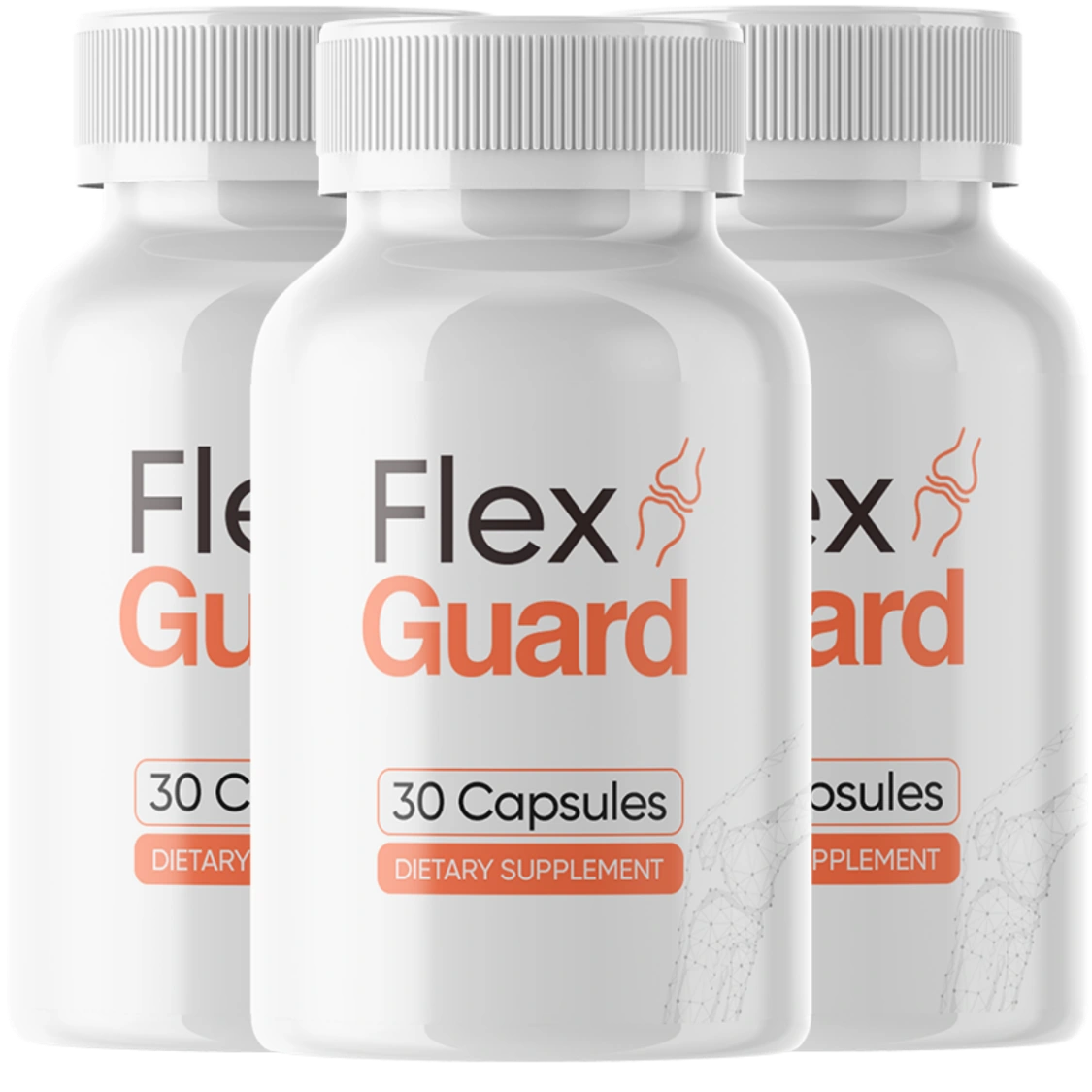
That sequence works on any bottle in this category, including the one sold on this website. The FlexGuard panel is reproduced in full so it can be run through the same eight steps as anything else on a shelf.
What has better evidence than any of these capsules
Two things with more evidence than anything in this guide, both of them free.
A guide to joint supplements that does not say this is not worth reading. The Cochrane review of exercise pooled fifty-four trials of land-based exercise for knee osteoarthritis and found improvements in both pain and physical function. No ingredient in this whole category has a result of that size and that consistency behind it.
Weight is the second. Load through a knee is a multiple of body weight, and the arithmetic of that is not controversial. The NIAMS overview and MedlinePlus both put exercise and weight at the top of what actually helps.
Neither of those makes a supplement pointless. Both make it a supplement: something added to the things that work rather than something bought instead of them. Anybody selling a capsule as a replacement for either is selling something else.
NCCIH's short guide to using supplements sensibly is the best five minutes available to somebody about to buy their first joint product, and it costs nothing.
Joint pain that is new, severe, on one side only, hot, swollen, or that followed an injury needs examining rather than supplementing. A single appointment settles more than a year of capsules, and that is true whichever bottle is under consideration.
Joint supplements: short answers
Which joint ingredient has the most evidence?
Glucosamine, by volume of trials. That is not the same as the most convincing evidence: the better-conducted studies tend to find less, and two clinical guidelines recommend against it for osteoarthritis.
Do joint supplements rebuild cartilage?
No. No dietary supplement may claim that, and cartilage that has thinned does not thicken because a capsule contains one of its components.
What works better than a supplement?
Exercise, by a distance. The Cochrane review of land-based exercise pooled fifty-four trials and found improvements in both pain and function.
How long should a trial of one last?
Eight to twelve weeks, which is the span most of the published studies used. A verdict at week one is a verdict about the packaging.
Who publishes this FlexGuard website?
- Clegg DO, Reda DJ, Harris CL, et al. Glucosamine, chondroitin sulfate, and the two in combination for painful knee osteoarthritis. N Engl J Med. 2006;354(8):795-808. PMID 16495392. https://pubmed.ncbi.nlm.nih.gov/16495392/
- Towheed TE, Maxwell L, Anastassiades TP, et al. Glucosamine therapy for treating osteoarthritis. Cochrane Database Syst Rev. 2005;2005(2):CD002946. PMID 15846645. https://pubmed.ncbi.nlm.nih.gov/15846645/
- Singh JA, Noorbaloochi S, MacDonald R, et al. Chondroitin for osteoarthritis. Cochrane Database Syst Rev. 2015;1(1):CD005614. PMID 25629804. https://pubmed.ncbi.nlm.nih.gov/25629804/
- Kolasinski SL, Neogi T, Hochberg MC, et al. 2019 American College of Rheumatology/Arthritis Foundation guideline for the management of osteoarthritis of the hand, hip, and knee. Arthritis Rheumatol. 2020;72(2):220-233. PMID 31908163. https://pubmed.ncbi.nlm.nih.gov/31908163/
- Bannuru RR, Osani MC, Vaysbrot EE, et al. OARSI guidelines for the non-surgical management of knee, hip, and polyarticular osteoarthritis. Osteoarthritis Cartilage. 2019;27(11):1578-1589. PMID 31278997. https://pubmed.ncbi.nlm.nih.gov/31278997/
- Villacis J, Rice TR, Bucci LR, et al. Do shrimp-allergic individuals tolerate shrimp-derived glucosamine? Clin Exp Allergy. 2006;36(11):1457-61. PMID 17083356. https://pubmed.ncbi.nlm.nih.gov/17083356/
- Kimmatkar N, Thawani V, Hingorani L, et al. Efficacy and tolerability of Boswellia serrata extract in treatment of osteoarthritis of knee: a randomized double blind placebo controlled trial. Phytomedicine. 2003;10(1):3-7. PMID 12622457. https://pubmed.ncbi.nlm.nih.gov/12622457/
- Sengupta K, Alluri KV, Satish AR, et al. A double blind, randomized, placebo controlled study of the efficacy and safety of 5-Loxin for treatment of osteoarthritis of the knee. Arthritis Res Ther. 2008;10(4):R85. PMID 18667054. https://pubmed.ncbi.nlm.nih.gov/18667054/
- National Center for Complementary and Integrative Health. Boswellia: Usefulness and Safety. https://www.nccih.nih.gov/health/boswellia
- Daily JW, Yang M, Park S. Efficacy of turmeric extracts and curcumin for alleviating the symptoms of joint arthritis: a systematic review and meta-analysis of randomized clinical trials. J Med Food. 2016;19(8):717-29. PMID 27533649. https://pubmed.ncbi.nlm.nih.gov/27533649/
- Kuptniratsaikul V, Dajpratham P, Taechaarpornkul W, et al. Efficacy and safety of Curcuma domestica extracts compared with ibuprofen in patients with knee osteoarthritis: a multicenter study. Clin Interv Aging. 2014;9:451-8. PMID 24672232. https://pubmed.ncbi.nlm.nih.gov/24672232/
- Brien S, Lewith G, Walker A, et al. Bromelain as a treatment for osteoarthritis: a review of clinical studies. Evid Based Complement Alternat Med. 2004;1(3):251-257. PMID 15841258. https://pubmed.ncbi.nlm.nih.gov/15841258/
- Andres S, Pevny S, Ziegenhagen R, et al. Safety aspects of the use of quercetin as a dietary supplement. Mol Nutr Food Res. 2018;62(1). PMID 29127724. https://pubmed.ncbi.nlm.nih.gov/29127724/
- Kim LS, Axelrod LJ, Howard P, et al. Efficacy of methylsulfonylmethane (MSM) in osteoarthritis pain of the knee: a pilot clinical trial. Osteoarthritis Cartilage. 2006;14(3):286-94. PMID 16309928. https://pubmed.ncbi.nlm.nih.gov/16309928/
- Debbi EM, Agar G, Fichman G, et al. Efficacy of methylsulfonylmethane supplementation on osteoarthritis of the knee: a randomized controlled study. BMC Complement Altern Med. 2011;11:50. PMID 21708034. https://pubmed.ncbi.nlm.nih.gov/21708034/
- Butawan M, Benjamin RL, Bloomer RJ. Methylsulfonylmethane: applications and safety of a novel dietary supplement. Nutrients. 2017;9(3). PMID 28300758. https://pubmed.ncbi.nlm.nih.gov/28300758/
- Soeken KL, Lee WL, Bausell RB, et al. Safety and efficacy of S-adenosylmethionine (SAMe) for osteoarthritis. J Fam Pract. 2002;51(5):425-30. PMID 12019049. https://pubmed.ncbi.nlm.nih.gov/12019049/
- Fransen M, McConnell S, Harmer AR, et al. Exercise for osteoarthritis of the knee. Cochrane Database Syst Rev. 2015;1(1):CD004376. PMID 25569281. https://pubmed.ncbi.nlm.nih.gov/25569281/
- National Institute of Arthritis and Musculoskeletal and Skin Diseases. Osteoarthritis. National Institutes of Health. https://www.niams.nih.gov/health-topics/osteoarthritis
- MedlinePlus. Osteoarthritis. U.S. National Library of Medicine. https://medlineplus.gov/osteoarthritis.html
- National Center for Complementary and Integrative Health. Using Dietary Supplements Wisely. https://www.nccih.nih.gov/health/using-dietary-supplements-wisely
- Code of Federal Regulations, Title 21, Section 101.36: Nutrition labeling of dietary supplements. Office of the Federal Register. https://www.ecfr.gov/current/title-21/chapter-I/subchapter-B/part-101/subpart-G/section-101.36
Run the FlexGuard panel through those eight checks
Eight rows, every amount printed, and a website that publishes the comparison rather than hiding it.
Two bottles $158 · six bottles $294 · 60 days from purchase
Order FlexGuard On The Official WebsiteOne capsule a day · 30 per bottle · lot FLE-26/FL-2166