FlexGuard Official Website › Blog › What Is in a Joint Supplement?
What Is in a Joint Supplement, and What Should a Good Label Show?
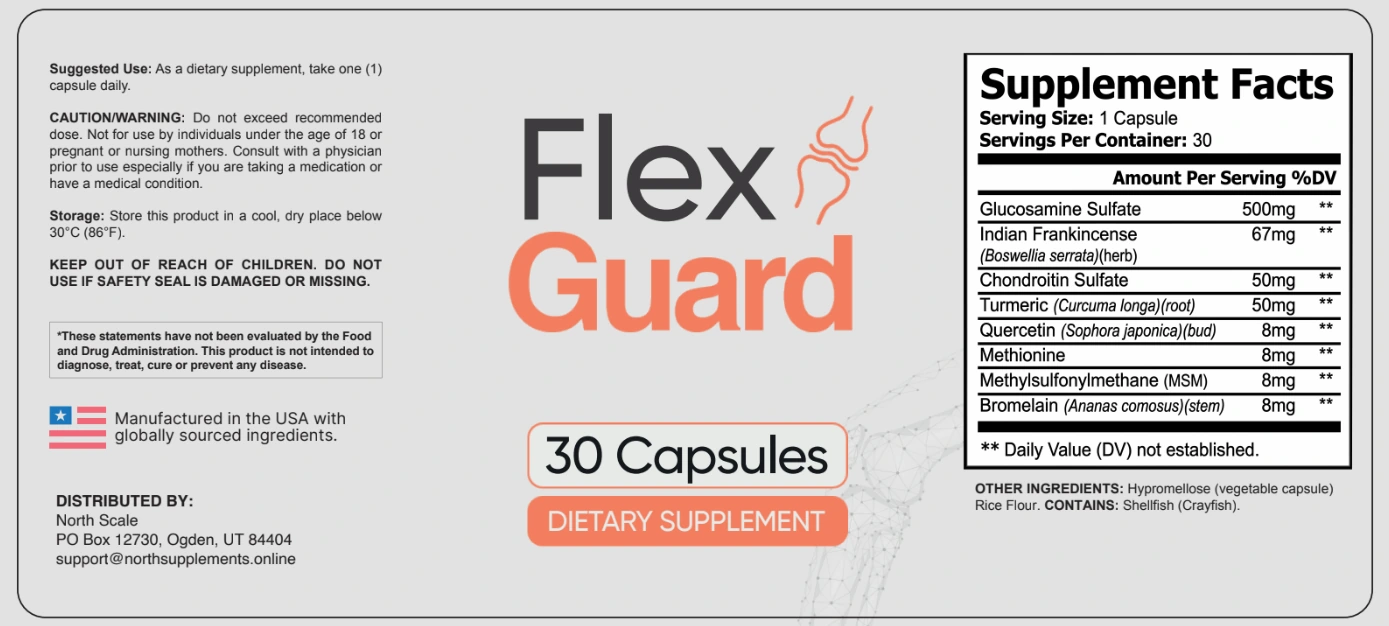
A joint supplement usually mixes cartilage building blocks such as glucosamine and chondroitin, plant extracts such as boswellia and turmeric, and sulfur compounds such as MSM. A good label prints an amount for every row. FlexGuard does, at 699 mg per capsule, with shellfish declared.
Open any bottle in this aisle and you meet a long list of unfamiliar names. Some are old, well-studied compounds. Some are there mostly because they sound good. The aim of this page is to give each name a plain meaning, so a label stops being a wall of words.
We use the FlexGuard panel as the worked example because it is printed in full. We also say where we are guessing, and where the site publishes nothing.
What is a joint supplement, in plain words?
It is a dietary supplement sold to support joint comfort and movement. It is not a drug. It does not treat, prevent or cure any disease, and the FDA does not approve supplements before they go on sale.
Most contain ingredients from three families. The first is the cartilage family, glucosamine and chondroitin. The second is plants studied for their effect on inflammatory signalling, such as boswellia, turmeric, quercetin and bromelain. The third is the sulfur family, MSM and methionine.
Do cartilage supplements work, and what are glucosamine and chondroitin?
Glucosamine is a sugar-based amino compound that the body works into cartilage. Chondroitin sulfate is a long-chain compound that sits in cartilage. Supplements typically take it from cattle windpipe or fish cartilage. The idea is simple: supply the parts, support the tissue.
The testing is not simple. In GAIT, the largest trial, the whole group saw no significant advantage over placebo. Cochrane reviewers found that outcomes hinged on the preparation, and rated the small chondroitin gains as low quality. NCCIH calls the picture mixed.
The amounts matter here. The trials used 1,500 mg of glucosamine a day and 800 to 1,200 mg of chondroitin. A FlexGuard capsule holds 500 mg and 50 mg. This site publishes nothing on chicken, shark or other animal cartilage products, so we say nothing about them.
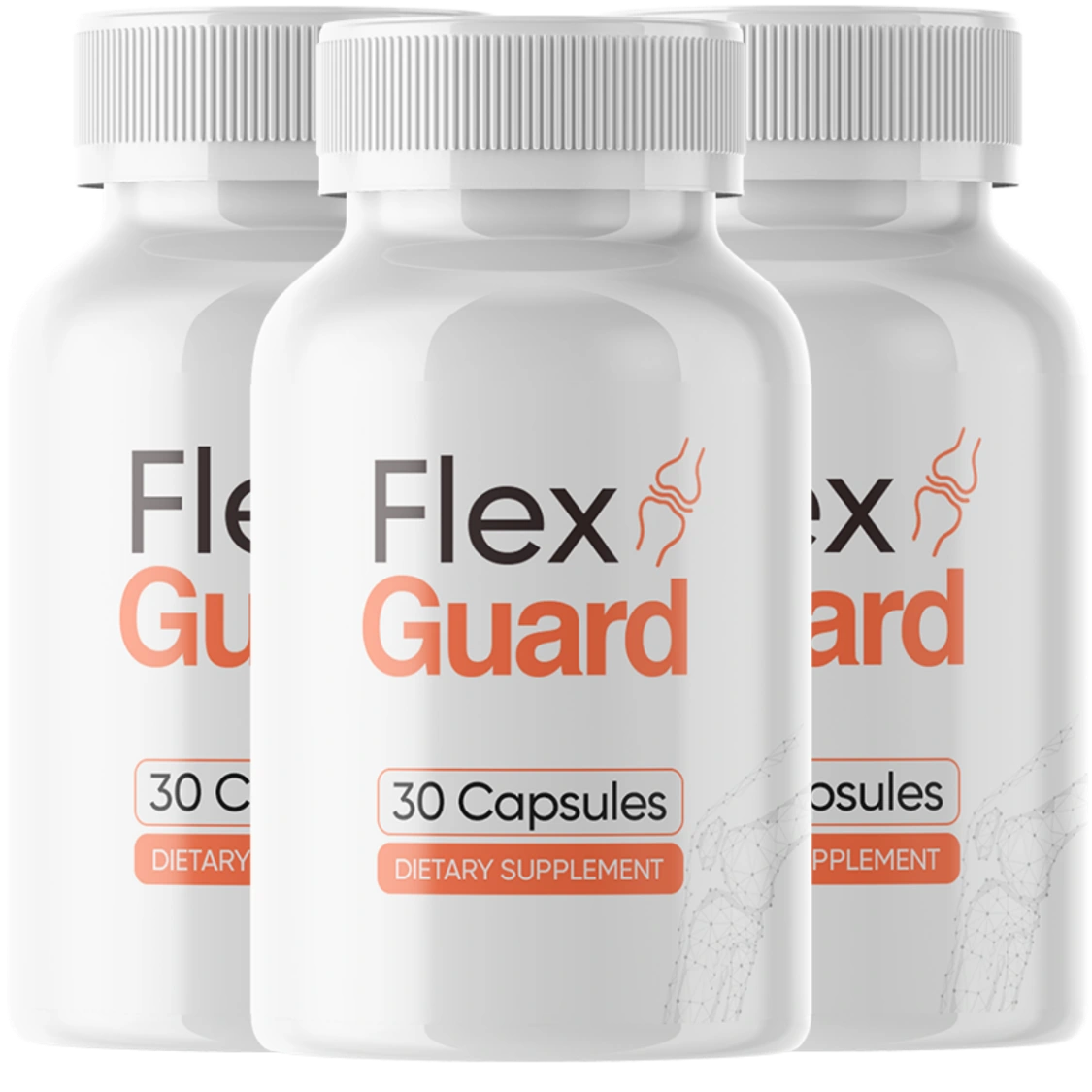
Each FlexGuard bottle shows the same eight printed rows, and the 60-day guarantee extends to opened bottles.
See today's price and guarantee
Disclosure: this desk earns from orders placed through the checkout on this site. BuyGoods, the retailer at the checkout, shows the current price.
What is MSM, and how much of it does a joint formula need?
MSM stands for methylsulfonylmethane, an organic sulfur compound. Food holds only traces of it, so supplement makers produce it industrially. In the United States it ranks among the top-selling joint ingredients.
Its trials used grams. In 2006 a pilot gave fifty people 3 g twice daily, and in 2011 a randomised study used 1.125 g three times daily. A 2017 review puts the literature between 1.5 g and 6 g a day.
FlexGuard lists MSM at 8 mg. That is milligrams against a literature in grams, a gap of about three orders of magnitude. The honest description is that the label names the ingredient. It does not reproduce the studied dose.
Which plant ingredients show up, and what should you look for?
Four plants appear in this formula. Each has a catch that the label does not always explain.
| Plant row | FlexGuard amount | What to look for on any label |
|---|---|---|
| Boswellia serrata (herb) | 67 mg | An extract ratio and an AKBA percentage. Neither is printed here. |
| Turmeric (root) | 50 mg | A curcuminoid percentage. Root powder holds only a small fraction of curcuminoids. |
| Quercetin (bud) | 8 mg | Trials used 250 mg a day upward, and little is absorbed. |
| Bromelain (stem) | 8 mg | An enzyme activity figure. None is printed here. |
Source: the printed label and the ingredient pages on this site.
Where a label gives a weight and nothing else, you can compare it with a trial only roughly. That does not make the ingredient bad. It makes your comparison loose.
Is an all natural or bone and joint formula better?
Natural describes where an ingredient comes from. It says nothing about dose. A natural row at 8 mg is still 8 mg.
The words bone and joint suggest vitamin D, calcium or collagen. FlexGuard carries none of those. Its panel has eight rows and no vitamin or mineral, which is why no row shows a Daily Value. It makes no bone claim.
The capsule shell is hypromellose, a plant material, and the other ingredient is rice flour. Yet the glucosamine inside is made from crustacean shell. So the product is not vegetarian or vegan, however plant-based the shell sounds.
Capsule, pill, tablet or gummy: does the form matter?
Form decides how many units a day you must take. A product with 1,500 mg of glucosamine usually needs three or four capsules. FlexGuard fits eight ingredients into one capsule because the amounts are smaller.
FlexGuard comes as a capsule only. The seller offers no gummy, powder or liquid drops, and there is no tablet. A gummy or a bottle of drops sold under the FlexGuard name is not the product described here.
What should a good joint supplement label show?
Work down the panel in this order, and stop at the first failure.
- A serving size, then an amount for every row. No blend totals.
- The unit of each row, compared with the unit its trials used.
- An extract ratio or marker figure for every plant row.
- An allergen line and a caution line that name who should skip it.
- A storage line and a safety seal notice.
FlexGuard passes the first, fourth and fifth. Its storage line asks for a cool, dry place below 30°C (86°F), and it carries a seal notice. It does not print extract ratios, so any plant comparison stays rough.
- Joint supplements are dietary supplements, not drugs, and the FDA does not approve them.
- The panel carries 8 actives, led by glucosamine sulfate (500 mg) and boswellia (67 mg). Chondroitin and turmeric root are 50 mg each. Quercetin, methionine, MSM and bromelain are 8 mg each.
- Together the actives come to 699 mg. The other ingredients are hypromellose and rice flour.
- The label declares shellfish (crayfish). It is not vegan or vegetarian.
- Extract ratios for boswellia and turmeric, and an activity unit for bromelain, are not printed.
- The form is a capsule, one a day, and not a gummy, a powder or drops.
Frequently asked questions
What is in a joint supplement?
Usually cartilage ingredients such as glucosamine and chondroitin, plant extracts such as boswellia and turmeric, and sulfur compounds such as MSM. FlexGuard has eight actives weighing 699 mg together.
What is MSM and why is it in a joint formula?
MSM is an organic sulfur compound. Its joint trials gave grams daily, between 1.5 g and 6 g. FlexGuard has 8 mg, so the name appears on the label but the studied dose does not.
Do cartilage supplements work?
The evidence is mixed. GAIT showed no significant gain across the whole group, and Cochrane reviews found that results depended on the preparation. The FlexGuard formula itself has never been trialled.
Is FlexGuard an all natural supplement?
The site does not use that claim, and natural says nothing about dose. The shell is plant material, but the glucosamine comes from crustacean shell, so the product is not vegan.
Is FlexGuard a capsule, pill or tablet?
It is a capsule taken once daily. No gummy, powder or liquid form is offered, so a listing in those forms is not the product this site describes.
What should I check first on a joint supplement label?
Check that every row prints its own amount. A blend total makes comparison impossible. Then check the units against the research, the allergen line and the caution line.
Our view
Ingredient lists are built to sound impressive. A short dictionary and a habit of checking units are enough to cut through most of that. The most useful thing on any bottle is the milligram column, because it is the one part you can hold against a published trial.
FlexGuard shows its milligram column in full, which is more than many bottles do. The column also shows why the formula is a broad, modest capsule and not a trial-dose one. Both facts belong in the same sentence. Ask your doctor about it if you take medicine, and read the panel on your own bottle when it arrives.
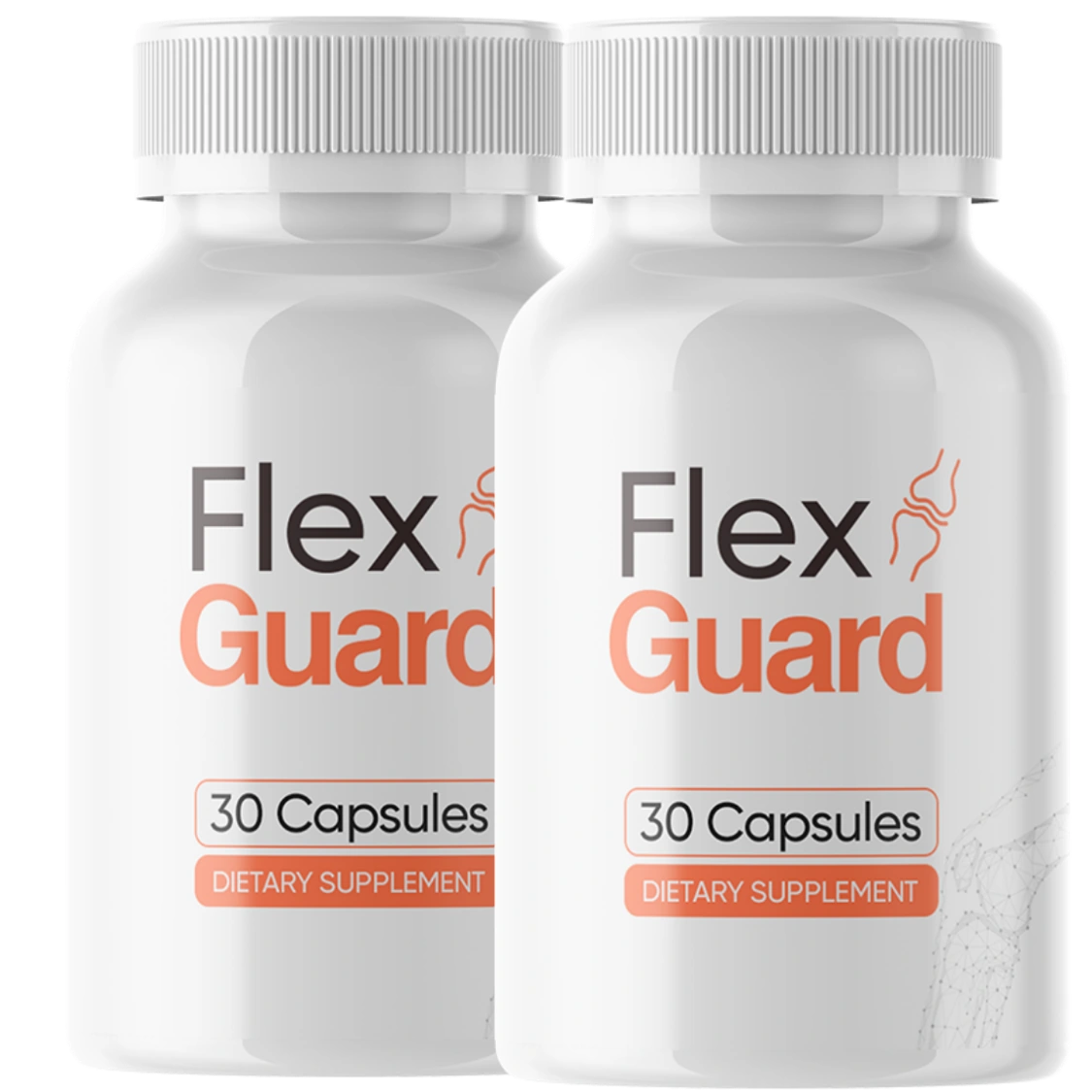
On the official checkout you will find each pack's current price along with the shipping charge for your address.
See today's price and guarantee
Disclosure: this desk earns from orders placed through the checkout on this site. BuyGoods, the retailer at the checkout, shows the current price.
FlexGuard is a dietary supplement. It is not a drug, it is not FDA approved, and no dietary supplement is. These statements have not been evaluated by the Food and Drug Administration. This product is not intended to diagnose, treat, cure or prevent any disease. Ask a doctor about your own health, medicines and joints.
Sources named on this site
- The GAIT trial
- The Cochrane review of glucosamine
- The Cochrane review of chondroitin
- The 2003 Boswellia crossover trial
- The 5-Loxin trial
- A 2016 meta-analysis of the turmeric trials
- NCCIH on turmeric
- The 2006 MSM pilot trial
- A 2011 randomised trial of MSM
- A 2017 review of MSM
- A review of the bromelain trials
- The German federal safety review of quercetin
- The meta-analysis of SAMe
- 21 CFR 101.36
- NCCIH on glucosamine and chondroitin
Last updated