FlexGuard Official Website › Blog › Is FlexGuard FDA Approved?
Is FlexGuard FDA Approved, or Is It a Medicine?
No. FlexGuard is a dietary supplement, not a drug or medication, and it is not FDA approved. No dietary supplement is approved by the FDA before sale. It is not meant to diagnose, treat, cure or prevent any disease. Ask a doctor about your own joints and medicines.
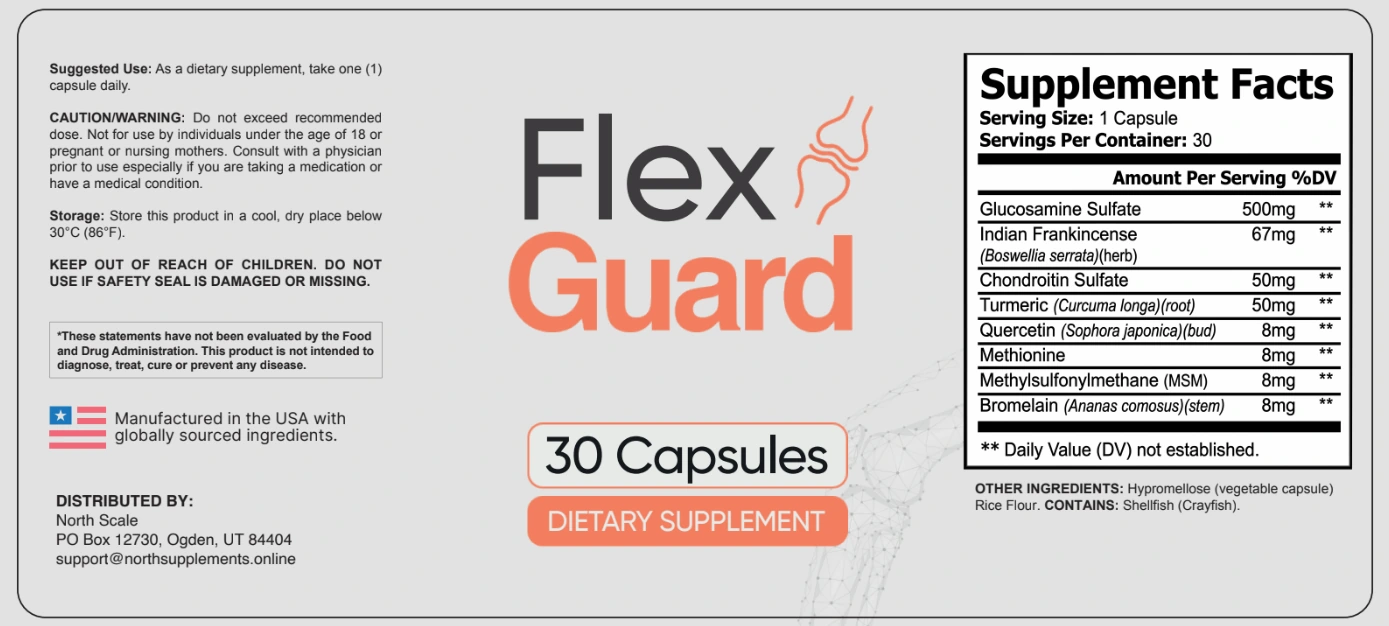
Two searches come up again and again: is FlexGuard FDA approved, and is FlexGuard a medicine. The answers are short, but the reasons are worth a few minutes. They explain what the seller may say, what it may not say, and how to read the seals on the pack.
Is FlexGuard FDA approved?
No. Dietary supplements are not approved by the Food and Drug Administration before they go on sale, and this product is not FDA approved. The seller's site prints that sentence plainly, and so do we. Any page that suggests otherwise is relying on a reader not looking closely.
What the law asks is different. A maker is responsible for the safety of what it sells and for the truth of what it says about it. The Federal Trade Commission publishes guidance on the advertising side, including what a seller must be able to back up before making a claim.
Is FlexGuard a medicine, a drug or a medication?
No. It is a dietary supplement, and the label says so. Searches like FlexGuard medicine, FlexGuard medication and FlexGuard tablet mix up the category. A supplement is a food-type product. A medicine is a drug that has passed a different test and may claim to treat a disease.
FlexGuard is also not a tablet. It is a capsule, with a plant-derived hypromellose shell, taken once a day. And it replaces nothing a doctor has prescribed. If you take medicine for any reason, keep taking it as told and talk to your prescriber before adding a supplement.
What may FlexGuard say it does?
A supplement may make what are called structure and function statements. These describe support for a normal body function. They may not claim to treat a disease. The seller names three of them.
- Supports joint comfort.
- Supports mobility and everyday movement.
- Supports the body through everyday joint stress.
That is the ceiling. The seller states that FlexGuard is not intended to diagnose, treat, cure or prevent any disease, and that it does not treat, prevent or manage arthritis. The standard statement follows: these statements have not been evaluated by the Food and Drug Administration.
Is FlexGuard an anti-inflammatory?
Searchers sometimes ask whether FlexGuard is an anti-inflammatory. The seller does not claim that. Four of its plant rows, namely boswellia, turmeric, quercetin and bromelain, are studied for their effect on inflammatory signalling. But the amounts in the capsule are mostly below the amounts used in that research, and the formula as a whole has never been trialled.
So the careful reading is this. FlexGuard contains ingredients that scientists study in that area. It is not sold as an anti-inflammatory drug, and it should not be treated as one.
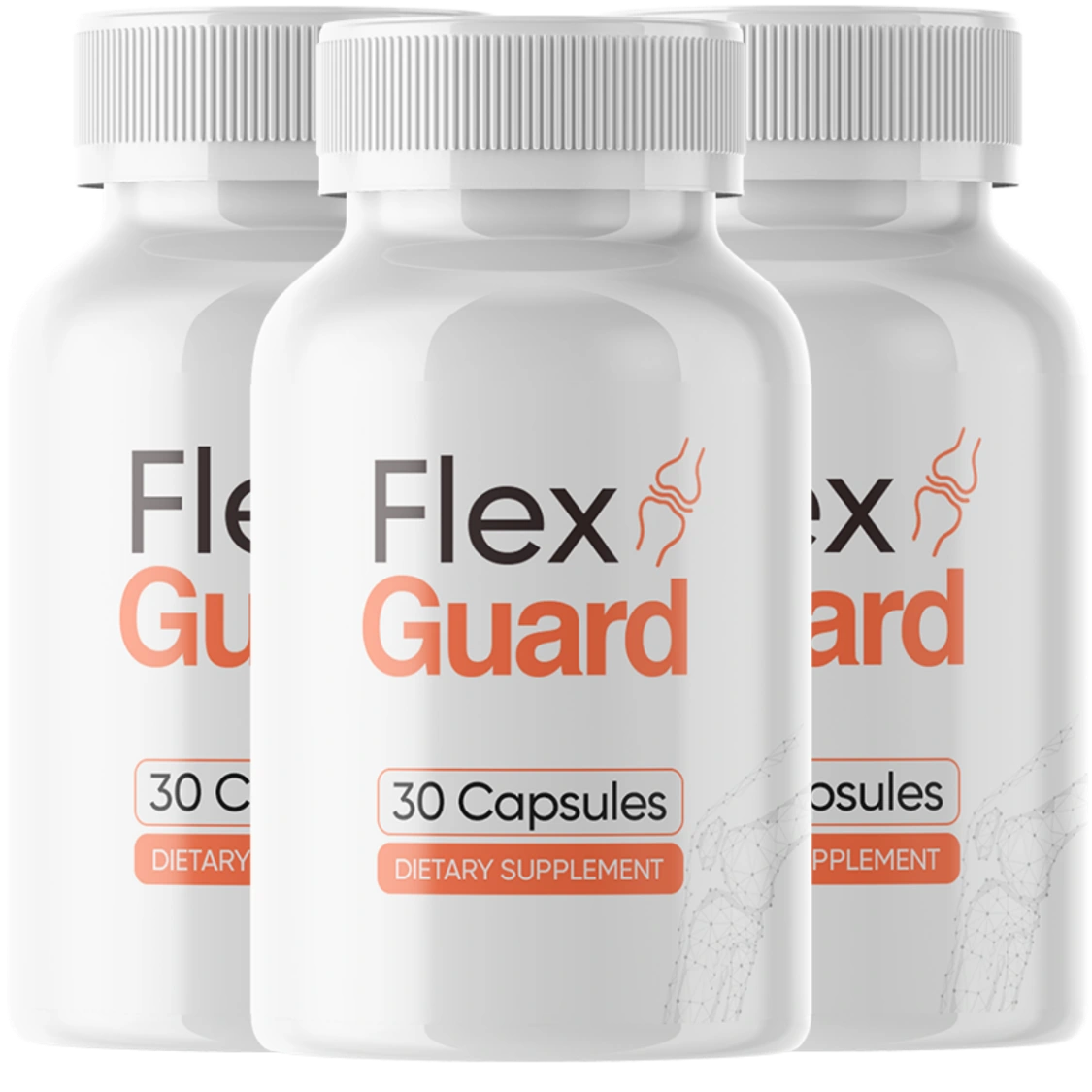
The official page lists the three support statements, the full panel and the 60-day guarantee from the date of purchase.
See today's price and guarantee
Disclosure: this desk earns from orders placed through the checkout on this site. BuyGoods, the retailer at the checkout, shows the current price.
What do the four seals on the pack really mean?
The pack carries four marks. Three describe how or where it was made, and one describes the sale. None is a laboratory result and none is approval.
| Seal | What it claims | What it does not claim |
|---|---|---|
| FDA-registered facility | The agency knows the factory exists and may inspect it | That the product is approved or tested |
| GMP (Good Manufacturing Practice) | How a facility documents and controls its process | A test of the bottle in your hand; the certifying body is not named |
| Foreign and domestic ingredients | Manufactured in the USA with globally sourced ingredients | Where the glucosamine itself comes from |
| 60-day satisfaction | A purchase policy for getting your money back | Anything about whether the capsule works |
Based on the seller's own seal audit.
A registered facility means the factory has told the agency it exists. It is not a stamp of approval on FlexGuard. GMP governs process, not product, and a well-run plant can make a poorly chosen formula, correctly and repeatably. The sound test for any seal is to ask who says so and what they tested.
Is FlexGuard third-party tested?
This is where an honest page has to say no. The seller holds a lot code (FLE-26/FL-2166) and a certificate reference (FLE-2166-26-FL). Both are filing references. Neither is a laboratory result. The site holds no independent certificate of analysis for this product and does not claim one.
| Question | Answer |
|---|---|
| Was it made in a registered facility? | The pack's seal says so |
| Was this batch independently tested? | This desk holds no independent certificate and does not claim one |
| Are the printed amounts verified by assay? | Not by any document this desk holds |
| Is the product FDA approved? | No. No dietary supplement is |
| Can a bottle be traced to a batch? | Yes, by lot FLE-26/FL-2166, for bottles shipped from this desk |
A Supplement Facts panel follows the labelling format set out in federal rule 21 CFR 101.36. That rule sets what a panel must show. It does not mean the agency approved the contents.
What should you do if a page says FlexGuard treats or cures arthritis?
Close it. No dietary supplement may claim to treat, cure, prevent or manage arthritis, and this seller's own pages say FlexGuard does not. A page that says otherwise has left the wording this seller uses behind, and you cannot trust the rest of what it says.
The same goes for a page that says FlexGuard is clinically proven, or shows a trial of the formula. No trial of this formula at these amounts has been run. If you want to check a claim for yourself, the FTC guidance on health products and the NCCIH guide to using supplements wisely are both free to read.
Who decides what a supplement label may say?
Two bodies share the job. The labelling side, such as the format of the Supplement Facts panel, comes under federal rules. The advertising side is watched by the Federal Trade Commission, which expects a seller to hold proof for any claim it makes. That is why the claims on this site stop at comfort, mobility and everyday joint stress.
For you, the practical result is simple. A modest claim with a plain disclaimer is what a careful seller looks like. A dramatic claim with no disclaimer is worth a second look, whatever seals sit beside it. When your question is medical, the person to ask is your doctor, not a label.
- FlexGuard is a dietary supplement, not a drug, not a medication and not FDA approved.
- It may claim only support for joint comfort, mobility and everyday joint stress.
- It does not treat, prevent or manage arthritis.
- The four pack seals describe manufacturing and the sale, not a test result.
- Lot FLE-26/FL-2166 and reference FLE-2166-26-FL are filing references, not lab proof.
- This desk holds no independent certificate of analysis, and none is published.
- Medical questions belong with a doctor.
Frequently asked questions
Is FlexGuard FDA approved?
No. It is a dietary supplement, and no dietary supplement is approved by the FDA before sale.
Is FlexGuard a medication?
No. It is a dietary supplement sold in capsule form. It is not a drug and it is not meant to diagnose, treat, cure or prevent any disease.
Does an FDA-registered facility mean FlexGuard is approved?
No. Registration means the agency knows the factory exists and can inspect it. It says nothing about approving this product.
Is FlexGuard an anti-inflammatory drug?
No. Some of its plant ingredients are studied for inflammatory signalling, but the seller makes no such claim, and the amounts are mostly below those studied.
Is FlexGuard tested by a laboratory?
This site holds no independent certificate of analysis. The lot code and certificate reference are filing references, not laboratory proof.
Can FlexGuard replace my arthritis treatment?
No. It does not treat arthritis. Keep to what your doctor has prescribed, and speak to your doctor before you add any supplement.
Our view
The regulatory facts here are plain, and we think plain is right. FlexGuard is a supplement. It is not approved, it is not a drug, and it claims only support. The seller says so more directly than most pages in this category do.
Keep that in mind when you see any seal or claim, including ours. Ask what it proves, and ask your doctor about anything medical. The label and the 60-day guarantee are tools for your own decision, not a medical promise.
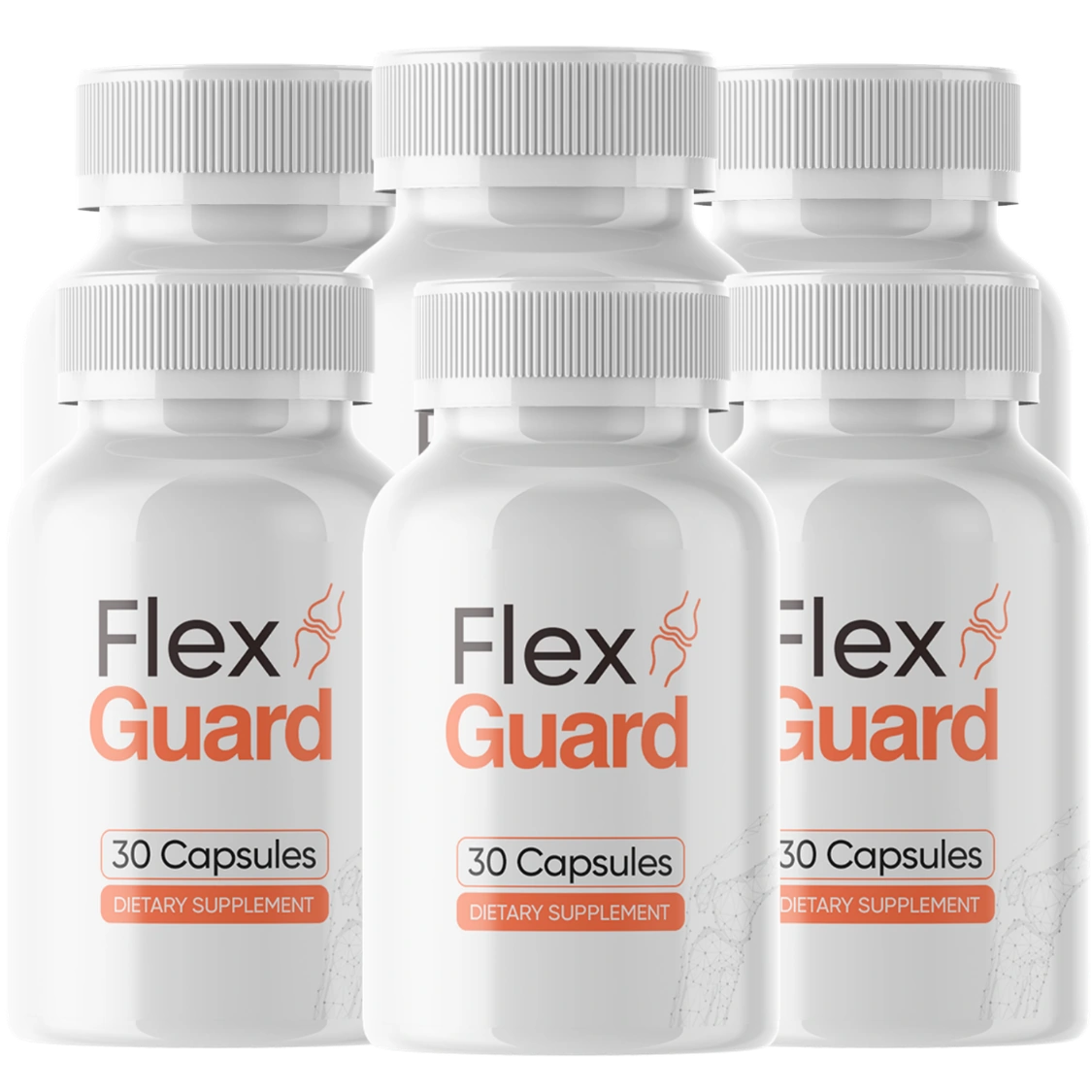
It is sold as a dietary supplement, and the current pack prices and terms are on the official page.
See today's price and guarantee
Disclosure: this desk earns from orders placed through the checkout on this site. BuyGoods, the retailer at the checkout, shows the current price.
FlexGuard is a dietary supplement. It is not a drug, it is not FDA approved, and no dietary supplement is. These statements have not been evaluated by the Food and Drug Administration. This product is not intended to diagnose, treat, cure or prevent any disease. Ask a doctor about your own health, medicines and joints.
Sources named on this site
Last updated