FlexGuard Official Website › Blog › How Does FlexGuard Work?
How Does FlexGuard Work? Three Ideas in One Capsule, Explained Simply
FlexGuard puts three ideas in one daily capsule: cartilage building blocks (glucosamine, chondroitin), plant rows studied for inflammatory signalling (boswellia, turmeric, quercetin, bromelain) and sulfur rows (MSM, methionine). Most amounts sit below the trial doses, and no trial of the formula exists.
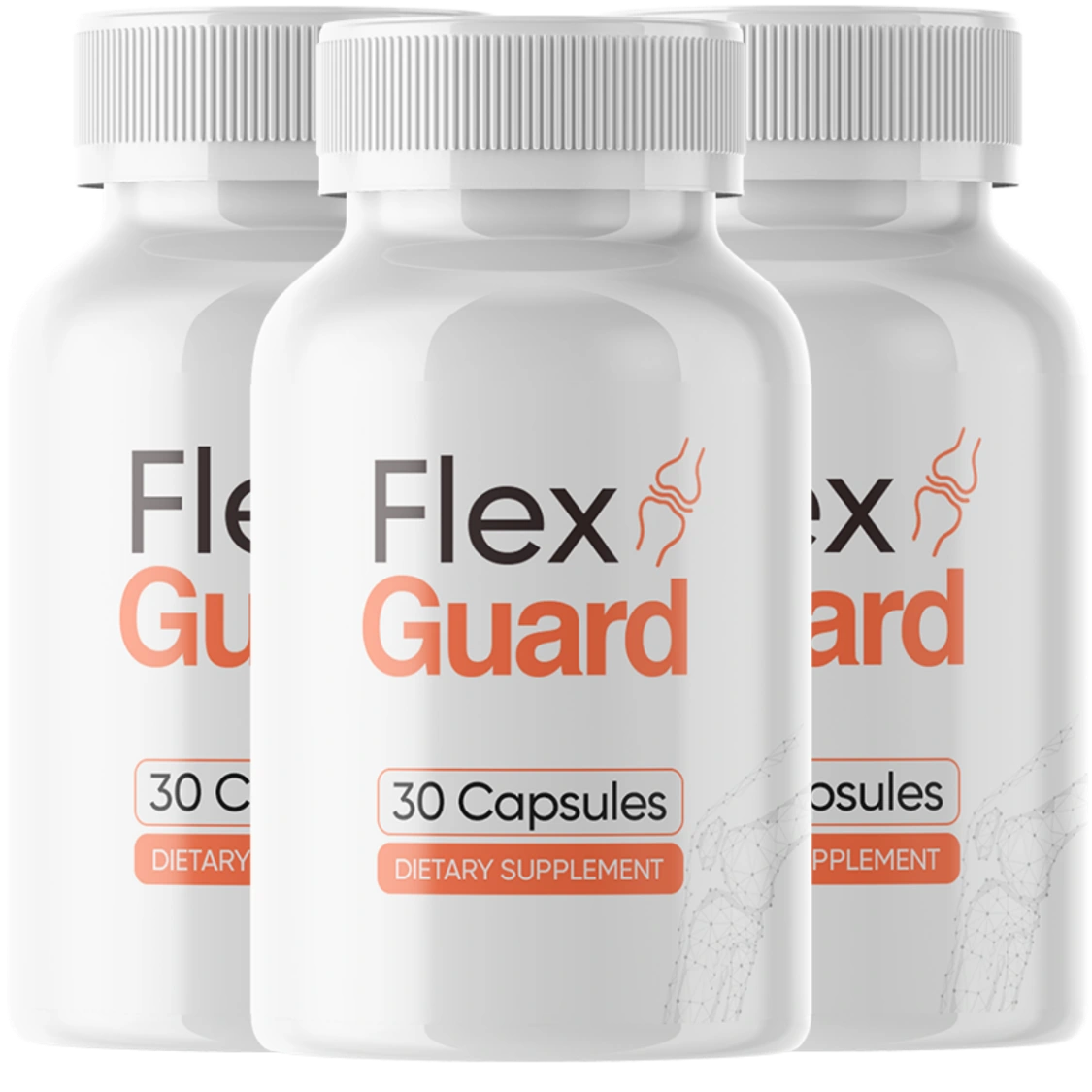
Sellers often say a product works by magic words like support and balance. This page uses plainer ones. It follows each of the eight rows to the idea behind it, then asks how much of that idea a single capsule can carry.
You will find no claim here that FlexGuard fixes anything. You will find a map of what it contains and why each piece is there.
How does FlexGuard work, in one minute?
Think of three shelves in one capsule. The top shelf holds parts that cartilage is made from. The middle shelf holds plant rows studied for their effect on the signals behind everyday joint discomfort. The bottom shelf holds two sulfur rows.
- Shelf one: glucosamine sulfate (500 mg) and chondroitin sulfate (50 mg).
- Shelf two: boswellia (67 mg), turmeric root (50 mg), quercetin (8 mg) and bromelain (8 mg).
- Shelf three: MSM (8 mg) and methionine (8 mg).
Each shelf has its own research, and each shelf has its own gap between the amount studied and the amount in the capsule. The sections below take them in turn.
What is idea one, and what does it mean for cartilage?
Cartilage is a springy tissue made of collagen and long sugar chains that hold a lot of water. It has no blood supply of its own. It is fed by fluid that moves in and out as the joint is loaded and eased, which is one reason movement matters so much.
Glucosamine is a sugar-based compound the body uses to make those chains. Chondroitin sulfate is one of the chains. The idea is that swallowing them supplies raw material. It is about fifty years old, and it has been tested more than any other idea in this category.
The tests are not tidy. GAIT saw no significant gain across its whole group. The three-year trial of glucosamine sulfate reported changes in symptoms and joint space. Both used 1,500 mg of glucosamine a day. This capsule holds 500 mg, so it sits outside the tested range rather than against it.
The panel is printed in full, and the three-bottle pack gives you the whole trial with a month to spare.
See today's price and guarantee
Disclosure: this desk earns from orders placed through the checkout on this site. BuyGoods, the retailer at the checkout, shows the current price.
What is idea two, the plant rows?
Boswellia, turmeric, quercetin and bromelain are not building blocks. Researchers study them for how they act on inflammatory signalling. In lab work, boswellic acids affect a pathway called 5-lipoxygenase, and curcuminoids touch several signalling routes.
Boswellia is the plant story of this formula. A 2003 crossover trial and the 5-Loxin trial give amounts to compare with, and 67 mg is in the same neighbourhood. Turmeric is root, not a standardised extract, and the label does not print a curcuminoid share. Quercetin and bromelain are 8 mg each, far below the trial figures.
Together the four plant rows weigh 133 mg, and boswellia is half of that.
What is idea three, the sulfur rows?
Sulfur shows up twice. MSM is an organic sulfur compound with a real joint literature, measured in grams. Here it is 8 mg, which is milligrams against grams.
Methionine is an essential amino acid. The body converts it into SAMe, and SAMe is the compound with a joint meta-analysis behind it, at about 1,200 mg a day. Eight milligrams of the starting material is not the same as supplying SAMe, and the label does not say it is. No trial has tested methionine alone for joints.
Ordinary food, such as eggs, meat and garlic, already supplies sulfur amino acids in amounts a capsule cannot match.
How much of each idea does one capsule actually hold?
This is the blunt part. Hold each printed amount against what the studies used.
| Row | In one capsule | In the trials | In plain words |
|---|---|---|---|
| Glucosamine sulfate | 500 mg | 1,500 mg a day | One third |
| Boswellia serrata | 67 mg | 100 to 250 mg of extract | The closest row |
| Chondroitin sulfate | 50 mg | 800 to 1,200 mg a day | Roughly one sixteenth |
| Turmeric root | 50 mg | About 1,000 mg of curcuminoids | Root, not extract |
| Quercetin | 8 mg | 250 mg a day upward | Below a normal diet |
| Methionine | 8 mg | No trial alone | Untested at any amount |
| MSM | 8 mg | 1.5 g to 6 g a day | Milligrams against grams |
| Bromelain | 8 mg | Hundreds of mg a day | A small fraction |
Sources: the printed label and the trial amounts listed on this site.
One row is in range, one is at a third, and six are well under. That is what you get from putting eight ingredients into 699 mg of active material, and it explains the one-capsule routine.
Why would any effect be slow?
Cartilage is fed slowly, and signalling changes show up over weeks in every trial that measured them. Nothing here blocks a pain signal the way a pharmacy painkiller does.
The seller reports that buyers typically wait 3-6 weeks. The trials behind these ingredients measured over eight to twelve weeks, at larger amounts. Any joint product that promises a difference in three days is promising something its own ingredients cannot deliver.
What can FlexGuard not do?
It does not treat, prevent or manage arthritis. It does not rebuild cartilage. It is not a painkiller. It is not FDA approved, and no supplement is. The 2019 ACR guideline advised against glucosamine at full trial doses for diagnosed osteoarthritis, and that is a medical question this page does not try to answer.
What the seller claims is joint comfort, mobility and support through everyday joint stress.
Why is it one capsule when others take three or four?
Because the amounts are smaller. A full 1,500 mg of glucosamine will not fit in a single capsule. FlexGuard fits 500 mg of it plus seven other rows, so you swallow one capsule and the label reads 30 servings per bottle.
The trade is plain. You gain an easy routine and a broad panel. You give up the trial-level glucosamine dose. Which one matters more is your call, and your doctor can help you weigh it.
- The capsule holds three ideas: cartilage parts, plant rows and sulfur rows.
- Eight printed amounts total 699 mg, with glucosamine sulfate at 500 mg.
- Only boswellia (67 mg) is near its research amount. Glucosamine is a third, chondroitin about a sixteenth.
- MSM is 8 mg where its trials used grams. No trial tested methionine alone.
- Buyers report waiting 3-6 weeks, and the trials ran eight to twelve weeks.
- No trial of this formula exists. It does not treat arthritis or rebuild cartilage.
- One capsule a day, 30 per bottle. The guarantee runs 60 days from purchase.
Frequently asked questions
How does FlexGuard work in the body?
On paper it works in three ways: glucosamine and chondroitin supply cartilage parts, four plant rows are studied for inflammatory signalling, and MSM and methionine supply sulfur. How much each does at these amounts is untested.
Does FlexGuard rebuild cartilage?
No. No dietary supplement may claim that. Cartilage that has thinned does not thicken because a capsule contains one of its components.
Why does FlexGuard take weeks to do anything?
Nothing on the panel acts quickly. Cartilage has no blood supply, signalling changes take weeks, and the trials ran eight to twelve weeks. Buyers report waiting 3-6 weeks.
Why is the glucosamine only 500 mg?
A full trial dose of 1,500 mg would not fit in one capsule alongside seven other rows. The seller chose breadth and a one-capsule routine over the trial-level amount.
Does methionine work like SAMe?
No. The body can convert methionine into SAMe, and SAMe has the joint research, at about 1,200 mg a day. Eight milligrams of methionine is not the same as that.
Can I take two capsules to speed it up?
No. The label sets one capsule a day and says not to exceed the dose. Two capsules would still be below the trial amount of glucosamine and would double seven rows nobody has studied.
Our view
A good explanation of how a product works should also say how much work each part can do. By that test, FlexGuard is a broad, modest capsule. It is neat on paper, well labelled and light on dose.
If that suits you, give it a fair test. Note two measurements, take one capsule a day, change nothing else for a month, and decide before the 60 days run out. If medicine or a diagnosis is part of your life, ask your doctor first.
The checkout lists what each pack costs now, and you can read the guarantee before you decide.
See today's price and guarantee
Disclosure: this desk earns from orders placed through the checkout on this site. BuyGoods, the retailer at the checkout, shows the current price.
FlexGuard is a dietary supplement. It is not a drug, it is not FDA approved, and no dietary supplement is. These statements have not been evaluated by the Food and Drug Administration. This product is not intended to diagnose, treat, cure or prevent any disease. Ask a doctor about your own health, medicines and joints.
Sources named on this site
- The GAIT trial
- The Cochrane review of glucosamine
- The three-year Lancet trial
- The Cochrane review of chondroitin
- The 2003 Boswellia crossover trial
- The 5-Loxin trial
- A 2016 meta-analysis of the turmeric trials
- NCCIH on turmeric
- The work on how little quercetin is absorbed
- The meta-analysis of SAMe
- A 2017 review of MSM
- A review of the bromelain trials
- The 2019 American College of Rheumatology guideline
- NCCIH on glucosamine and chondroitin
Last updated