FlexGuard Capsules Official Website: One a Day for Joint Support
FlexGuard is a once-a-day dietary supplement capsule for joint support, sold on its official website.
Use case: Adults who want one simple step in their routine take one capsule a day. The panel reads Contains: Shellfish (Crayfish).
How it works: Glucosamine sulfate and chondroitin are cartilage building blocks, while boswellia and turmeric are plant compounds proposed to act on inflammatory signalling.
This page adds those eight amounts up, sets each beside the dose its own research used, and covers the cost a day, how long buyers wait, the shellfish line on the panel, and how the 60-day window works.
- One capsule a day
- 30 capsules a bottle
- 8 actives, every amount printed
- 699 mg of actives in one capsule
- 3–6 weeks typical wait
- 60-day guarantee
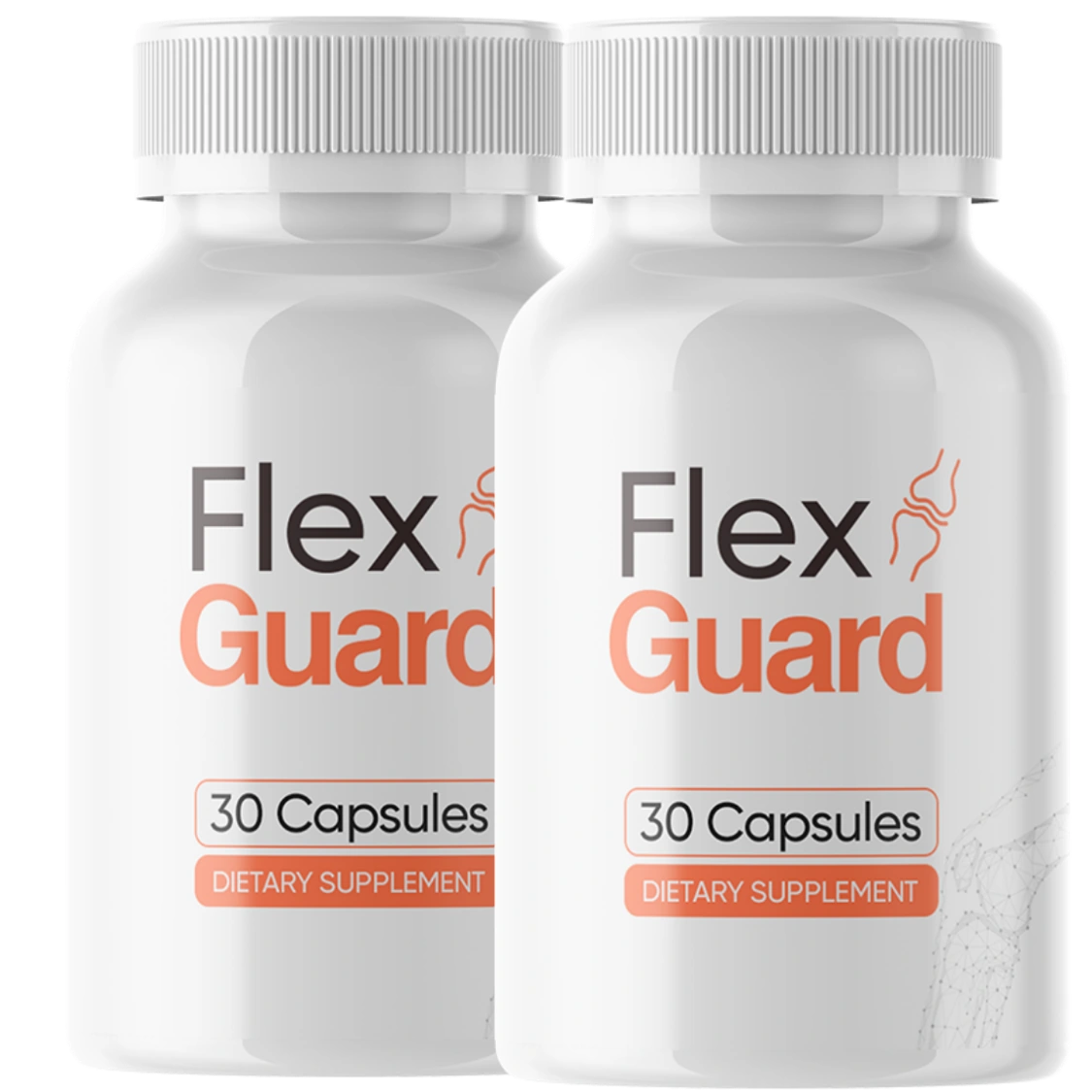
Lot FLE-26/FL-2166 · 30 capsules · one a day
FlexGuard supplement at a glance: the label in six lines
The FlexGuard label in short: a capsule with a vegetable shell, one a day, 30 to a bottle, with eight actives and 699 mg in all. It supports joint comfort, contains shellfish, and costs $49 to $79 a bottle.
Six lines that settle most of what a buyer wants before scrolling.
| What the label prints | Detail |
|---|---|
| Form | A capsule with a vegetable shell. One a day, 30 to a bottle, so a bottle is a month to the day. |
| Serving | One capsule daily. No second dose to miss. |
| Named actives | 8, each with its own printed amount. Glucosamine sulfate at 500 mg leads, and the eight together come to 699 mg. |
| What it supports | supports joint comfort; supports mobility and everyday movement; supports the body through everyday joint stress. |
| What it is not | Not a medicine, not a treatment for arthritis, and not for anyone with a shellfish allergy. |
| Price and guarantee | $49 to $79 a bottle by pack, with 60 days from purchase to change your mind. |
Read from the printed label artwork and the seller’s own pack page on 19 September 2026.
Why people look for a joint supplement like FlexGuard
People look for a joint supplement like FlexGuard when stairs, kneeling or a stiff first twenty minutes each morning start to slow them down. FlexGuard is a once-daily capsule sold to support joint comfort and everyday movement.
What sends somebody looking, and the thing worth sorting out first.
It usually starts with a stair. Then kneeling to look under the sink, then getting up again, then the first twenty minutes of a morning when a knee takes a while to agree to anything. None of that is dramatic and most of it never reaches a clinic.
That is the reason this category exists: a lot of adults over forty have joints stiffer than they were and want to do something that is not a prescription. The honest starting point is that joint pain has several possible causes. The National Institute of Arthritis and Musculoskeletal and Skin Diseases sets out what osteoarthritis actually is. Pain that is new, severe, on one side only, hot or swollen, or that arrived with an injury, belongs in front of somebody who can examine it.
What a capsule like this one is for is the middle ground, alongside the things that move the needle most. The Cochrane review of exercise pooled fifty-four trials and found land-based exercise improves pain and function in the knee, which is more than any capsule in this category can show. A supplement sits beside that rather than instead of it.
What is FlexGuard? The daily joint capsule explained
FlexGuard is a dietary supplement capsule for daily joint support. You take one capsule a day, 30 to a bottle, so a bottle is a month. Each capsule carries eight actives, 699 mg in all, led by 500 mg of glucosamine sulfate.
The short version, and the arithmetic the rest of this page runs on.
FlexGuard is a once-a-day capsule sold in 30-capsule bottles, which makes a bottle a month exactly. The label is printed for North Scale, and this website is the U.S. stocking desk for it rather than the maker.
The panel carries 8 actives, each with its own line and number. Glucosamine sulfate at 500 mg leads, then boswellia at 67 mg, chondroitin and turmeric at 50 mg each, and four rows of 8 mg: quercetin, methionine, MSM and bromelain.
Add those eight and a capsule carries 699 mg of active material, 500 mg of it glucosamine. The other seven share 199 mg. That sum is the most useful thing anybody can tell you about this bottle, and it is only possible because no proprietary blend hides the figures.
The shell is a vegetable capsule and the only other inactive is rice flour. The panel also declares shellfish, because glucosamine is made from crustacean shell, and that line decides the question for some people before any dose question arises.
Where to buy FlexGuard: why the official website?
Buy FlexGuard from the official website because the 60-day window belongs to the desk you bought from, the panel is reproduced in full, the lot is traceable, and tracking, changes and refunds go through one phone desk.
Six practical differences, none of them about the formula itself.
The refund window belongs to the desk you bought from
The 60-day window is this desk's policy and it opens the day your you pay. A bottle bought through a marketplace reseller is covered by that reseller's policy, whatever it happens to be.
The panel is reproduced here in full
The supplement facts page prints all eight rows, the other-ingredients line and the allergen line, so the bottle that arrives can be held against this website.
The shellfish line is on the front, not in the small print
Crayfish-derived glucosamine is the likeliest reason to send this product back, so it is in the first screen rather than found after the parcel arrives.
The lot is traceable, and no price is invented
Bottles shipped from here carry lot FLE-26/FL-2166 with certificate reference FLE-2166-26-FL, and the batch page is plain about what a filing reference is. The seller publishes no struck comparison price for this product, so none appears on this site either.
A desk that answers the phone
Tracking, changes and refunds go through +1 (877) 257-0710. The website address handles corrections and cannot see an order, which is stated here so nobody wastes three days on the wrong inbox.
How does FlexGuard work? Does it work?
FlexGuard rests on three ideas: cartilage building blocks (glucosamine and chondroitin), plant rows (boswellia, turmeric, quercetin and bromelain), and sulfur and amino acid rows (MSM and methionine). The evidence behind each idea carries a different weight.
Three ideas on one panel, carrying three different weights of evidence.
Three separate ideas sit on this panel, and they are worth pulling apart because the research behind them is not equally strong.
The cartilage building blocks: glucosamine and chondroitin
Both are components of cartilage, and the proposal is that supplying them supports the tissue taking the load. This pairing has the largest trial record: the NIH-funded GAIT trial put 1,583 people on 1,500 mg of glucosamine, 1,200 mg of chondroitin, both or placebo for six months. The dosage section sets those against the amounts on this label.
The plant rows: boswellia, turmeric, quercetin and bromelain
Four botanicals proposed to act on inflammatory signalling rather than on cartilage. Boswellia has the most direct joint evidence of the four: a 90-day randomised trial of an extract standardised to 30 per cent AKBA reported improvements at 100 mg and 250 mg a day. All four sit here well below the amounts their papers used.
The sulfur and amino acid rows: MSM and methionine
The two most often misread. MSM is an organic sulfur compound tested in knee osteoarthritis, always in grams. Methionine is an essential amino acid and the precursor the body uses to make SAMe, which is a different compound with its own dose. Eight milligrams of one is not eight milligrams of the other.
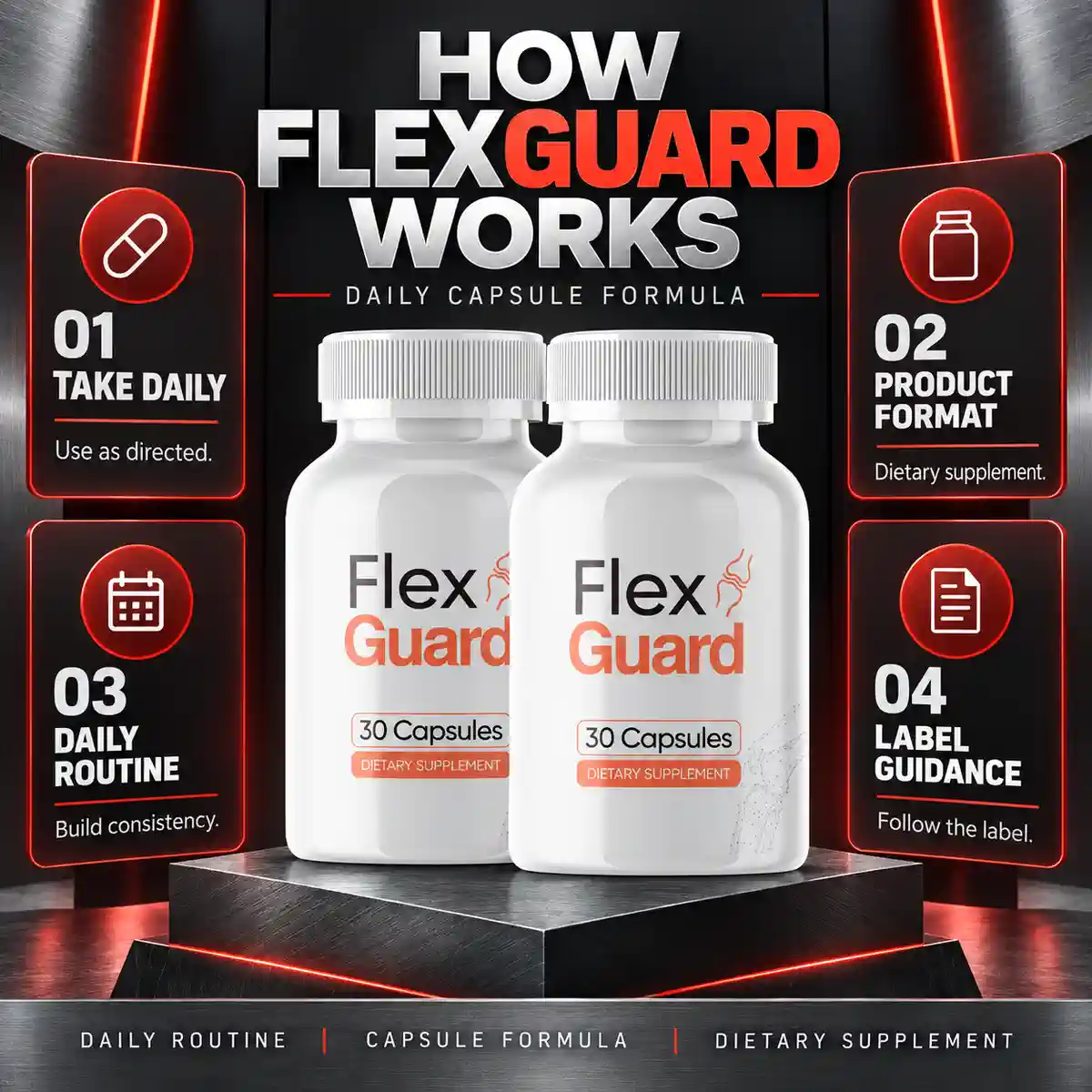
None rebuilds a joint and none is a treatment for arthritis. Cartilage that has thinned does not thicken because a capsule contains one of its components. What a supplement here can do is support comfort and everyday movement.
FlexGuard Ingredients: what is in one capsule, row by row
FlexGuard ingredients are glucosamine sulfate 500 mg, Indian frankincense (Boswellia serrata) 67 mg, chondroitin sulfate 50 mg, turmeric 50 mg, and quercetin, methionine, MSM and bromelain at 8 mg each. Other ingredients are hypromellose and rice flour.
Eight actives, every amount printed, and the dose each one's research used.
Eight actives, every amount printed. What each one is, and the amount its own research ran at.
Glucosamine Sulfate
500 mgThe row that defines the capsule: 500 of its 699 mg. An amino sugar the body uses in cartilage, and the most-studied ingredient in this category. The Cochrane review pooled twenty studies in 2,570 people and found results split by preparation. Every trial ran at 1,500 mg a day.
Indian Frankincense
Boswellia serrata, herb67 mgFrankincense resin, and the botanical here with the most direct joint evidence. The 5-Loxin trial used a 30 per cent AKBA extract at 100 mg and 250 mg a day, and was funded by that extract's maker. This is the closest row to its own research.
Chondroitin Sulfate
50 mgGlucosamine's usual partner and a larger cartilage molecule. The Cochrane review pooled forty-three trials in 9,110 people, found a small pain improvement at low quality of evidence, and drew on studies running 800 to 1,200 mg a day.
Turmeric
Curcuma longa, root50 mgThe kitchen spice, and the source of curcuminoids. The distinction that matters is root against standardised extract: a 367-person trial used 1,500 mg a day of a standardised extract. Root powder is a small fraction curcuminoid by weight.
Quercetin
Sophora japonica, bud8 mgA flavonoid found in onions, apples and capers, taken here from the Japanese pagoda tree bud. The supplement literature describes intakes from 250 mg a day upward, and quercetin is poorly absorbed, so 8 mg is a food-level amount.
Methionine
8 mgAn essential amino acid the body gets from protein in food; one egg carries a few hundred milligrams. The joint interest is indirect, because it is the precursor of SAMe, and SAMe rather than methionine is what has a joint evidence base.
Methylsulfonylmethane
MSM8 mgAn organic sulfur compound sold widely for joints, and the row where units matter most. The 2017 review of it describes a literature measured in grams a day. This row is single milligrams.
Bromelain
Ananas comosus, stem8 mgProtein-digesting enzymes from pineapple stem, used in Europe for swelling after injury. The review of its osteoarthritis studies found the trials small and the doses in the hundreds of milligrams.
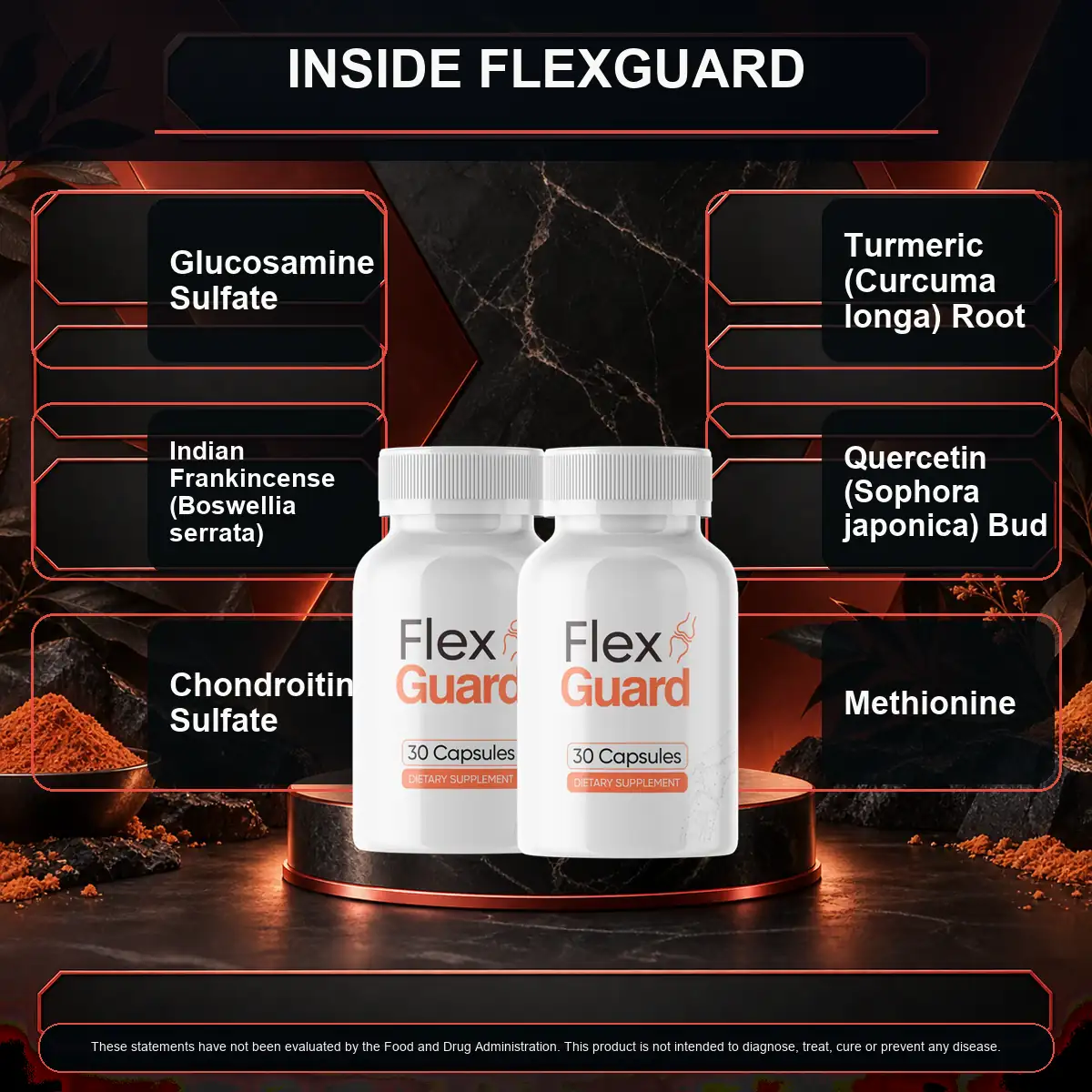
Beneath the panel the label prints hypromellose, a vegetable capsule, and rice flour. Then the allergen line: shellfish, crayfish. A vegetable shell does not make this a vegetarian product. Two facts, two different questions.
FlexGuard Supplement Facts: what the label prints
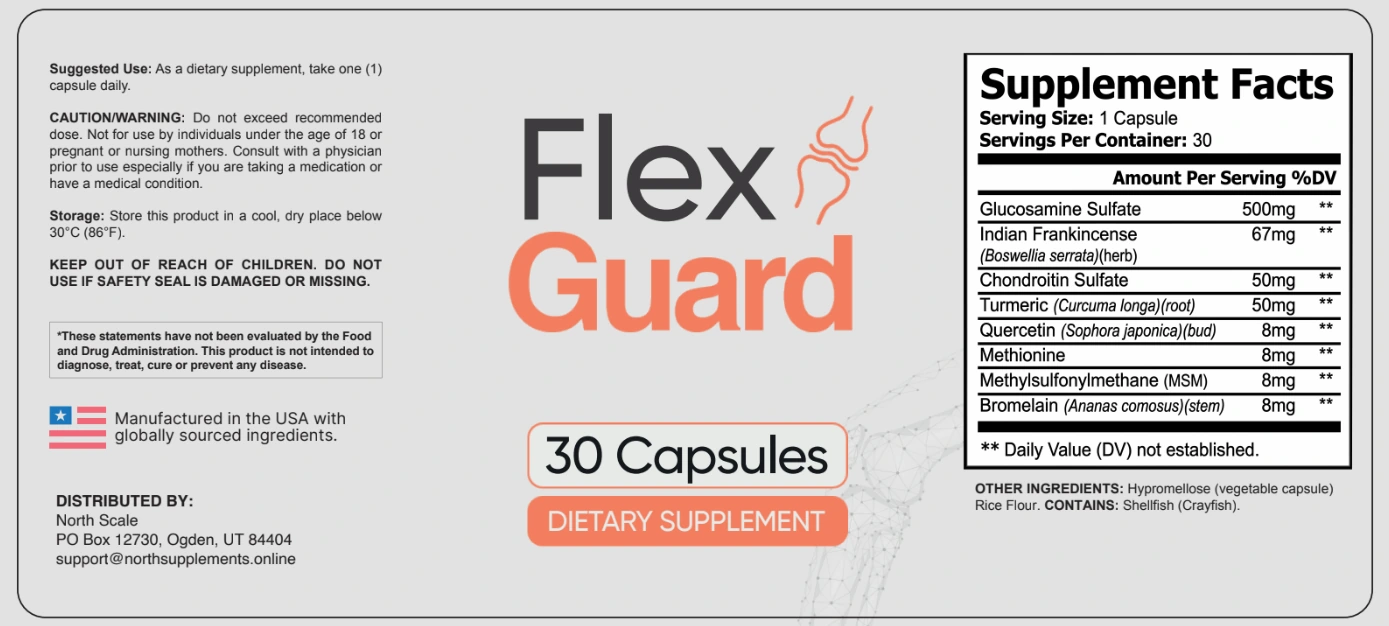
The FlexGuard supplement facts panel gives one capsule as the serving size and 30 servings per container, with an amount for each of eight actives. It also lists hypromellose and rice flour, and states Contains: shellfish (crayfish).
All eight rows as printed, so this page can be held against the bottle.
| Row | Amount per capsule | % Daily Value |
|---|---|---|
| Glucosamine Sulfate | 500 mg | † |
| Indian Frankincense (Boswellia serrata) (herb) | 67 mg | † |
| Chondroitin Sulfate | 50 mg | † |
| Turmeric (Curcuma longa) (root) | 50 mg | † |
| Quercetin (Sophora japonica) (bud) | 8 mg | † |
| Methionine | 8 mg | † |
| Methylsulfonylmethane (MSM) | 8 mg | † |
| Bromelain (Ananas comosus) (stem) | 8 mg | † |
Serving size one capsule. Servings per container 30. The dagger marks a row with no established Daily Value, which is every row on this panel.
Other ingredients: hypromellose (vegetable capsule), rice flour. Contains: shellfish (crayfish).
The seller's front page names what the capsule supports and stops there. The label artwork shipped with the product prints the whole panel, and that is what is reproduced above, row for row. The federal labelling rule sets out what a panel has to carry and how a row with no established Daily Value is marked, which is why the third column looks the same all the way down.
FlexGuard dosage: how is it dosed against the trials?
FlexGuard dosage is one capsule a day. Glucosamine at 500 mg is a third of the 1,500 mg a day used in the major trials, boswellia at 67 mg is the closest row to its research, and four rows sit at 8 mg.
Eight printed amounts, set against the amounts the trials actually ran.
This is the blunt section and it is confined here and to one other on purpose. Everything above is what the capsule contains. This is how those amounts compare with the research, and the comparison is possible only because the label prints every figure.
Four things stand out and they do not all point the same way.
Glucosamine carries the capsule. At 500 mg it is a third of the trial amount and still seventy-one per cent of everything in the capsule. A third of a studied dose is a real amount of a real ingredient. It is not what the evidence was built on.
Boswellia is the closest of the eight to its research. 67 mg against 100 mg of a concentrated AKBA extract is the same order of magnitude, which no other row can say. The extract ratio is not printed, so that comparison is indicative.
The four 8 mg rows are the ones to be realistic about. Together they make 32 mg, under five per cent of the capsule. MSM's trials ran at three and six grams a day.
Chondroitin sits at a sixteenth of the pooled trial dose, in an ingredient whose own review found the benefit small even at the full amount.
The guidelines reached the same place from the other end: the 2019 American College of Rheumatology guideline recommends against glucosamine for knee, hip and hand osteoarthritis, at the full researched dose and for a diagnosed condition. It is quoted here because a page carrying only the encouraging half of this literature would not be worth reading.
699 mg of actives in a capsule, 500 mg of it one ingredient. Buy it for the glucosamine and you are buying a third of a trial dose; buy it for the other seven and you are buying 199 mg across seven names.
What are the benefits of FlexGuard?
The seller names three benefits, all supports statements: joint comfort, mobility and everyday movement, and the body through everyday joint stress. Nothing here is a painkiller, and nothing acts within an hour, so comfort is the right word.
The three things the seller names, and what sits behind each.
The seller names three things and this desk adds none: supports joint comfort; supports mobility and everyday movement; supports the body through everyday joint stress. Those are structure and function statements, the only kind a supplement may make.
Supports joint comfort
This rests mainly on the four plant rows and on the glucosamine. Comfort is the right word: nothing here is an analgesic and nothing acts within an hour.
Supports mobility and everyday movement
The glucosamine and chondroitin rows carry this one. Both are cartilage components studied for exactly this, and both sit well below the amounts those studies used. What moves mobility furthest in the record is loaded exercise.
Supports the body through everyday joint stress
The broadest of the three and the hardest to measure. It covers the ordinary wear of standing, walking and kneeling. MSM, bromelain and quercetin are here for this reason.
What the eight add up to in practice
One capsule daily, carrying a third of a trial dose of the best-studied joint ingredient and small amounts of seven others.
It does not treat, prevent or manage arthritis of any kind, it does not rebuild cartilage, and it replaces nothing a clinician has prescribed. The FTC’s guidance for health products sets out what a seller may say, and that sentence is on the right side of it.
What the seals on the FlexGuard pack mean
The FlexGuard pack carries four marks: FDA-registered facility, GMP, a made-in line, and a 60-day satisfaction policy. FDA registration is not approval, and no dietary supplement has FDA approval. None of the marks tells you how much of each ingredient is inside.
Four marks on the pack, and what each one claims.
 FDA-registered facilityRegistration means the agency knows the factory exists. It is not FDA approval, and no dietary supplement has that.
 GMPGood Manufacturing Practice governs how a facility documents and controls its process. Not a test of this bottle.
 Foreign and domesticThe fuller version of the made-in line: manufactured in the USA with globally sourced ingredients. Both halves are worth reading.
 60-day satisfactionA purchase policy set by the seller, counted from the date of purchase.
Four seals, and none contradicts the label, which is not always true in this category. What none of them tells you is how much of each ingredient is in the capsule.
Who is FlexGuard for?
FlexGuard suits adults over forty with ordinary everyday stiffness who want one capsule a day and will give it a proper run. It is not for anyone with a shellfish allergy, vegans, vegetarians, anyone under 18, or anyone pregnant or nursing.
Plainly, including the people for whom this is the wrong bottle.
- Adults over forty with ordinary everyday stiffness who want one capsule a day rather than a shelf of bottles.
- Anyone who wants to know exactly what they are taking, because this label prints all eight amounts.
- People who will give it a proper run. Most buyers report a wait of 3–6 weeks, and the window is roughly twice that.
- Anyone who has already added walking or strength work and wants something alongside it.
And who should leave it alone.
- Anyone with a shellfish allergy. The panel declares crayfish, and that ends the conversation for this product.
- Anyone vegan or vegetarian. The shell is a vegetable capsule and the glucosamine inside it is not.
- Anyone under 18, pregnant or nursing. The label says so in its own caution.
- Anyone taking warfarin, without raising it first. Side effects sets out why.
- Anyone whose joint pain is new, severe, one-sided, hot or swollen. That is an appointment rather than a capsule.
- Anyone expecting a third of a trial dose to behave like a full one.
How to take FlexGuard: dosage and timing
Take one FlexGuard capsule once a day, as the label reads. There is no second dose and no loading period. Take it at the same time each day, with food if your stomach prefers, and write down two things you can count.
Five things, and only the first is printed on the bottle.
One capsule, once a day
The label reads: as a dietary supplement, take one (1) capsule daily. No second dose and no loading period, which is the advantage of a once-daily capsule in a category where 1,500 mg of glucosamine usually means three or four.
With food, if your stomach prefers it
The label does not specify. Bromelain is a protein-digesting enzyme, so some people find it sits better with a meal.
At the same time every day
No hour works better than another. What helps is a fixed slot, because the commonest reason a two-month trial fails is that it was a three-week trial with gaps in it.
Write down two things you can count
How many minutes the first stairs take to feel normal, and how far you walk before you notice. Note both for a week now and a week at the end.
Judge it at a month, decide inside the window
The guarantee runs 60 days from the date you paid, so mark that date. Two bottles land close to it.
What form does FlexGuard come in?
FlexGuard is a capsule taken once a day, not a gummy, powder or liquid drops. The shell is hypromellose, the only other inactive is rice flour, and there are 30 capsules to a bottle, which is a month.
Worth confirming before buying, and one detail the format does not fix.
A capsule, taken once a day. Not a gummy, not a powder, not liquid drops. Thirty capsules to a bottle, which is thirty servings, which is a month.
The shell is hypromellose and the only other inactive is rice flour. No sugar, no sweetener and no flavouring, which is the advantage a capsule has over a gummy in a product taken daily for months.
What the format does not solve is the allergen. A vegetable shell around crayfish-derived glucosamine is still a shellfish product.
How long does FlexGuard take to work?
The distributor puts the common wait for FlexGuard at 3 to 6 weeks, and nothing measurable is expected in week one. The trials behind these ingredients ran over months at much larger amounts. The 60 days from purchase are long enough to test it.
A slow category, and a window long enough to test it in.
| When | What the research would predict | What buyers report |
|---|---|---|
| Week 1 | Nothing measurable. Nothing here is an analgesic and none of it acts quickly. | Early reviews are about the routine rather than an effect. |
| Week 2 to 4 | The earliest point anything in this literature registered, at full doses. | Where the complaints cluster: wanted more in week one. |
| Week 4 to 8 | The span most trials used to measure a change, at much larger amounts. | The distributor puts the common wait at 3–6 weeks. |
| Week 8 to 12 | Past the point where the shorter trials stopped measuring. | Reorders cluster at the end of a second or third bottle. |
| Past 12 weeks | No further change is predicted at these amounts. | Also past the guarantee, which is the argument for starting the clock properly. |
The middle column is what the published trials measured at their own doses. It is not a prediction about this capsule.
Joint stiffness varies week to week on its own, which makes it easy to credit or blame the wrong thing. Two numbers written down before you start and again at week eight is the cheapest honest test there is.
FlexGuard Reviews: what users notice
The distributor's summary covers 1,080 written reviews with an average of 4.7 out of 5 and 90% recommending it. Buyers praise the single daily capsule and the 60-day window, and mention a slow start. These are the seller's own figures.
The themes in the seller's own summary, and whether the panel explains them.
The distributor's summary covers 1,080 written reviews against 9,504 orders, with 90% recommending it and an average of 4.7 out of 5. Those are the seller's own figures rather than verified transcripts.
What comes up positively
Two themes: the single daily capsule and the sixty-day window. One capsule a day is a routine people keep.
What comes up negatively
Also two: a slow start, and wanting more inside the first week. That is what this panel would predict. Nothing here is fast, and a buyer expecting a first-week change has been set up by the category.
What are the common FlexGuard complaints?
The six complaints that recur about FlexGuard are nothing in week one, doses that are too small, shellfish missed, not vegetarian, online only, and two documents wording the window differently. Each gets the fairest answer below.
The six that recur, each with the fairest answer this desk can give.
“Nothing happened in the first week”
Predictable, and the most common complaint in the whole category. Nothing here acts quickly at any dose, let alone at these. The counter is a window of sixty days from purchase, which is long enough to find out.
“The doses are too small”
Largely fair, and this site says so in a section of its own rather than burying it. Glucosamine is at a third of the trial amount and four rows are at 8 mg. Boswellia is the exception and the one row this desk would defend.
“It contains shellfish and I did not notice”
The panel declares it and this website states it in the first screen, on the ingredients page, in the footer and on the side effects page. It rules the product out completely for some people, so it is repeated.
“It is not vegetarian even though the capsule is”
Correct, and genuinely confusing. The shell is plant material; the glucosamine inside it comes from crustacean shell.
“Only available online”
True. There is no retail distribution, and it is also why the refund window belongs to the desk you bought from. Where to buy covers what changes with a marketplace listing.
“Two documents word the window differently”
Fair, and this site says so rather than picking one quietly. Two of the documents behind this product word the sixty-day window differently. This website counts from purchase, the earlier of the two dates, so the advice is safe either way, and the guarantee page sets both out in full.
How does FlexGuard compare to other joint supplements?
Compared with a glucosamine and chondroitin single or a standardised turmeric extract, FlexGuard prints all eight amounts and needs one capsule a day. The trade-off is that most rows sit below the amounts their research used.
Against the two things somebody considering this would otherwise buy.
| FlexGuard | A glucosamine and chondroitin single | A standardised turmeric extract | |
|---|---|---|---|
| What you know about the dose | All eight amounts printed | Two ingredients, two numbers | One number, usually with a curcuminoid percentage |
| Ingredients | 8 across three approaches | 2 | 1 |
| Amount against its own research | Glucosamine at a third; boswellia closest; four rows at 8 mg | Usually the full 1,500 mg and 1,200 mg | Often the full 1,000 to 1,500 mg |
| Capsules a day | 1 | 2 to 4, because 1,500 mg does not fit in one | 2 to 3 |
| Typical cost a month | $49 to $79 | Usually $15 to $30 | Usually $20 to $40 |
A comparison of approaches rather than of brands. The two on the right are things anyone can buy without this website.
The case for a blend like this one is that it covers three ideas at once, tells you every amount and asks for a single capsule. The case against is that breadth at this size puts most rows below what their own research used. Which matters more depends on whether you would rather do one thing at the studied amount or several at a fraction of it.
FlexGuard price: what do the 2, 3 and 6 bottle packs cost?
FlexGuard costs $79 a bottle on the two-bottle pack ($158), $69 on three bottles ($207) and $49 on six bottles ($294). There is no single-bottle option. Shipping is shown at checkout, and every pack has 60 days from purchase.
Three packs, and sixty days from purchase on every one.
$79
a bottle$158 total
- 2 bottles · 60 capsules
- 60-day supply at one a day
- Shipping shown at the checkout
- 60-day money-back guarantee
Lot FLE-26/FL-2166 · ships from the U.S.
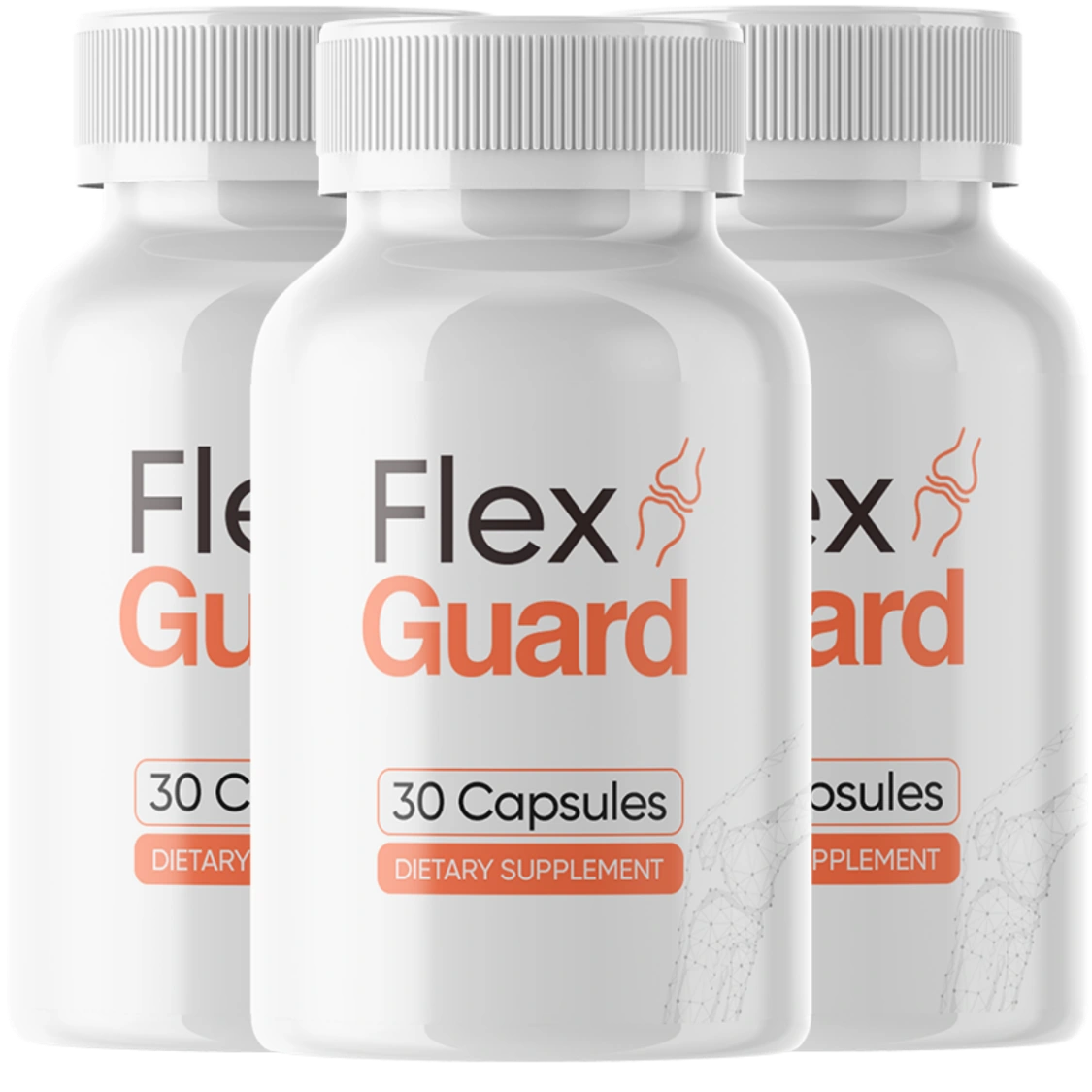
$69
a bottle$207 total
- 3 bottles · 90 capsules
- 90-day supply at one a day
- Shipping shown at the checkout
- 60-day money-back guarantee
Lot FLE-26/FL-2166 · ships from the U.S.
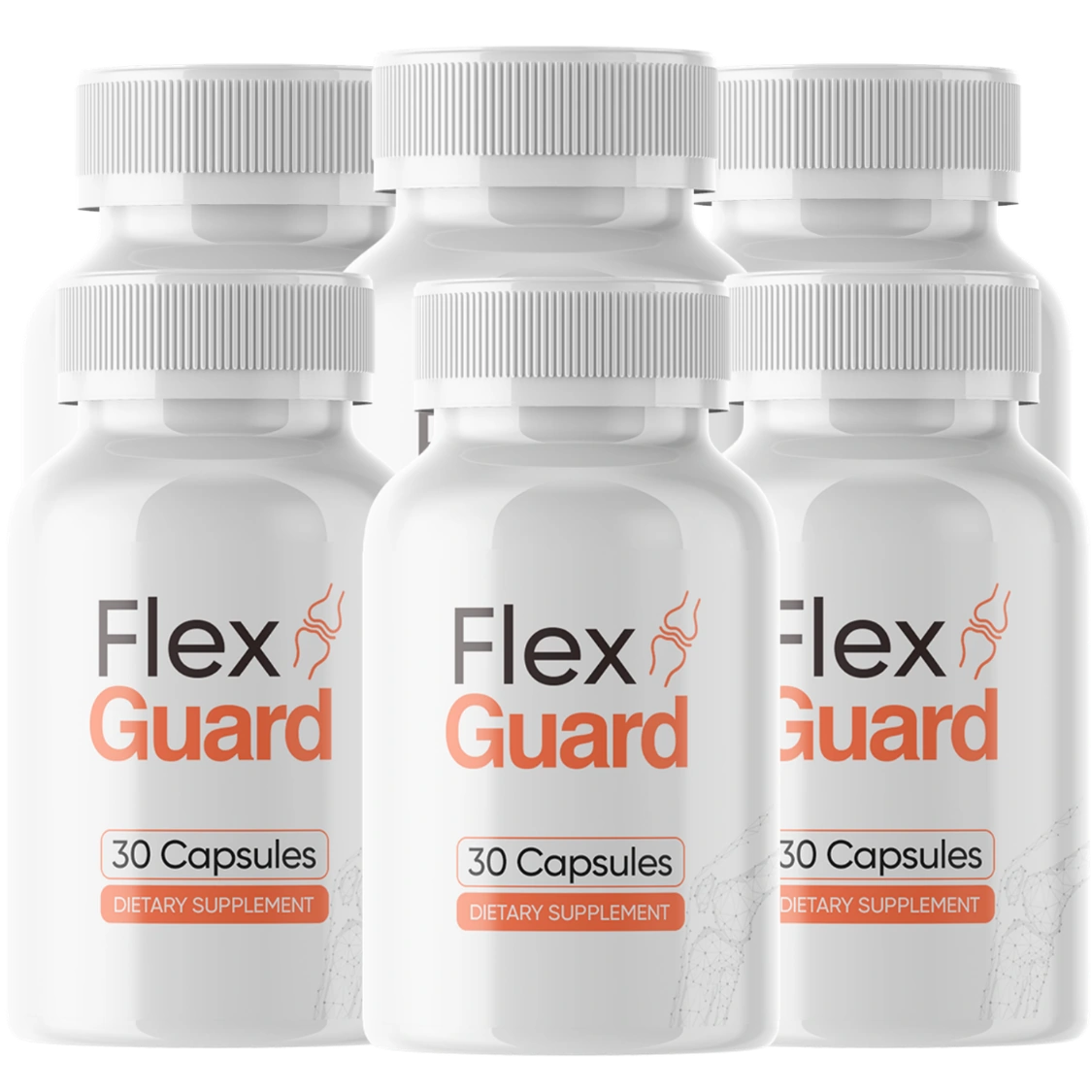
$49
a bottle$294 total
- 6 bottles · 180 capsules
- 180-day supply at one a day
- Shipping shown at the checkout
- 60-day money-back guarantee
Lot FLE-26/FL-2166 · ships from the U.S.
Pack prices as printed by the seller on 19 September 2026. BuyGoods is the retailer at the checkout, where the current price and the shipping for your address are shown. No comparison price is published for FlexGuard, so none is printed here.
There is no single-bottle option, so the smallest purchase is sixty days and lands exactly on the end of the guarantee.
FlexGuard cost per day, and which pack to choose
FlexGuard works out at $2.63 a day on two bottles, $2.30 on three and $1.63 on six. This desk points at the three-bottle pack, because 90 days covers the 60-day window with a month to spare.
The same three packs as a daily figure, which is the fair way to compare them.
| Pack | Total | A bottle | A day | Covers |
|---|---|---|---|---|
| 2 Bottles | $158 | $79 | $2.63 | 60 days |
| 3 Bottles | $207 | $69 | $2.30 | 90 days |
| 6 Bottles | $294 | $49 | $1.63 | 180 days |
One capsule a day, 30 to a bottle, so a bottle is a month. Shipping is not in the day rate; the seller shows it at the checkout.
The three-bottle pack is the one this desk would point at, for the calendar rather than the discount. Ninety days covers the window with a month to spare, so a decision at week eight is not also a decision about running out. Two bottles ends the same day your refund right does, and six puts four of its months outside the window.
FlexGuard side effects: is it safe, and what interacts?
The main FlexGuard warning is shellfish, because glucosamine is made from crustacean shell. Glucosamine has been reported to raise INR in people taking warfarin, so talk to your prescriber first. Consult a physician if you take any medication.
Four points, and only one of them is about a dose.
These are ingredients with long records of ordinary use and the amounts here are modest. Four points are worth knowing, and the first is not a dose question.
Shellfish: the line that decides it
The panel declares crayfish because glucosamine is made from crustacean shell. The research is reassuring: a controlled challenge in shrimp-allergic adults found no reactions, because the allergen in shellfish is a muscle protein rather than the shell. The label still declares it, and anybody with that allergy should treat this product as unsuitable.
Warfarin: the one interaction worth naming
Glucosamine has been reported to raise INR in people taking warfarin. A case report and a review of the MedWatch database set out how often. If you take warfarin, that is the conversation to have before the first capsule.
Blood sugar: less of a concern than it was
Glucosamine is an amino sugar, which led to a long worry about glucose control. The review evidence found no meaningful effect at standard doses, and this capsule carries a third of one.
Bromelain, quercetin and bleeding
Both carry theoretical bleeding cautions at supplement doses, which start in the hundreds of milligrams. At 8 mg each these are food-level amounts.
“Do not exceed recommended dose. Not for use by individuals under the age of 18 or pregnant or nursing mothers. Consult with a physician prior to use especially if you are taking a medication or have a medical condition.”
Joint pain that is new, severe, one-sided, hot or swollen needs looking at rather than supplementing. NCCIH's summary of the glucosamine and chondroitin evidence is a useful five minutes first.
FlexGuard pros and cons
FlexGuard's strengths are printed amounts for all eight actives, one capsule a day and a plainly declared allergen. Its weaknesses are glucosamine at a third of the trial amount, four rows at 8 mg, and a smallest purchase of $158.
Both columns, without weighting either one.
What works well
- Every one of the eight actives has its amount printed. No proprietary blend.
- One capsule a day, rare in a category where 1,500 mg of glucosamine normally means three or four.
- Boswellia at 67 mg is the same order of magnitude as the extract its trials used.
- The allergen is declared plainly rather than buried in a footnote.
- 60 days from purchase, the later of the two dates a policy like this could use.
What could be better
- Glucosamine at 500 mg is a third of the 1,500 mg every major trial used.
- Chondroitin at 50 mg is about a sixteenth of the pooled trial amount.
- Four rows at 8 mg. MSM in particular has only ever been tested in grams.
- No extract ratio is printed for the boswellia or the turmeric, so those two rows cannot be compared exactly.
- Crayfish-derived glucosamine rules it out for anyone with a shellfish allergy and for vegans and vegetarians.
- The ladder starts at two bottles, so the smallest possible purchase is $158.
Final verdict: is FlexGuard worth considering?
FlexGuard is worth considering if you want one capsule a day with every amount printed and will add walking or strength work. This desk scores it 4.3 for label transparency and 2.6 for dose adequacy.
Two scores with the reasoning attached, and the seller's own beside them.
On transparency this desk scores FlexGuard 4.3 out of 5. It prints an amount for every active, uses no proprietary blend, names the plant part for both botanicals, declares its allergen plainly and states its capsule material. Little in this category does all five.
On dose adequacy it scores 2.6. One row is close to its research, one is at a third of it, one at a sixteenth, and four at amounts their own trials never tested. That is a formula built for breadth in one capsule rather than depth in any ingredient.
Who it suits: somebody who wants one capsule a day, wants to know exactly what is in it, and is adding it to walking and strength work. Who it does not: anyone with a shellfish allergy, anyone who wants glucosamine at the amount the trials used, and anyone hoping a capsule will do the work of an appointment.
The distributor's own figure is 4.7 out of 5 from 1,080 reviews. None of the three numbers is evidence that the formula works.
Is FlexGuard legit or a scam? Is it for sale here?
FlexGuard is for sale here through the official checkout, and this desk is the U.S. stocking partner for it. It is a real product you can buy, and ordering through this website is not a scam.
Asked plainly, because people search for it plainly.
FlexGuard is for sale here through the official checkout, and this desk is the U.S. stocking partner for it. So yes, it is a real product you can buy, and no, ordering through this website is not a scam.
The more useful question is what prompts people to type it. Usually the funnel format: a long sales page, a pack ladder, a countdown. That is a marketing style rather than evidence of fraud, and no struck comparison price appears here because the seller publishes none.
The fair criticisms are about the amounts rather than the transaction, and they are set out at length in the dosage section and the critique rather than hidden.
What would be a scam: an invented laboratory certificate, a fabricated media endorsement, or a claim that these capsules treat arthritis. None appears here.
Where to Buy FlexGuard: the official website
Buy FlexGuard through the official checkout on this website. BuyGoods is the retailer at the checkout, and the refund window applies to orders placed here. A third-party marketplace seller applies its own returns policy.
One channel, and what changes if you use another.
Through the official checkout on this website. U.S. Stocking Partner for FlexGuard is the role this desk holds, BuyGoods is the retailer at the checkout, and the refund window applies to orders placed here.
Marketplace listings are a different proposition. A bottle from a third-party seller carries that seller's returns policy, and this desk cannot confirm the lot or the storage history on stock it did not ship.
Order FlexGuard on the official website
You can order FlexGuard on the official website in three packs: two bottles for $158, three for $207 or six for $294. Each bottle is 30 capsules at one a day, and every order has 60 days from purchase to decide.
Three packs, one capsule a day, and 60 days from purchase to change your mind on any of them.
Two bottles $158 · six bottles $294 · 60 days from purchase
Order FlexGuard On The Official WebsiteOne capsule a day · 30 per bottle · lot FLE-26/FL-2166
What do FlexGuard reviews say?
The distributor supplies a roster of eight named buyers and three distinct comments. Six of the eight carry the same comment about a daily habit that stuck and a reorder. This is summary copy, not verified transcripts.
Eight buyers, three distinct comments, presented as exactly what the seller sent.
The distributor supplies a roster rather than individual testimonials: eight named buyers and three distinct comments between them. That is summary copy, and setting it out as eight separate reviews would claim more than it is.
| Buyer | Where | Rating | Bought | Reported at |
|---|---|---|---|---|
| Andre W., 56 | Nashville, TN | ★★★★★ | 6 bottles | day 42 |
| Omar D., 51 | Portland, OR | ★★★★★ | 3 bottles | day 52 |
| Nate W., 48 | Miami, FL | ★★★★★ | 6 bottles | day 59 |
| Mike C., 66 | Phoenix, AZ | ★★★ | 2 bottles | day 23 |
| Chris K., 50 | Kansas City, MO | ★★★★★ | 6 bottles | day 58 |
| Gary A., 54 | Seattle, WA | ★★★★ | 6 bottles | day 49 |
| Miguel B., 48 | San Antonio, TX | ★★★★★ | 6 bottles | day 53 |
| Kevin E., 47 | Boston, MA | ★★★★★ | 6 bottles | day 56 |
Supplied by the distributor as summary copy. Not verified transcripts, and not evidence that the product works.
Six of the eight carry the same comment, about a daily habit that stuck and a reorder placed before the last bottle ran out. One reports it fair at a month and wanted more in week one. One stopped at two bottles after calling the desk.
Some desks on this estate publish buyer portraits supplied with the pack. None were sent with this one, and an invented face beside a real quote is worth less than the quote alone.
Does FlexGuard have a money-back guarantee?
Yes. FlexGuard has a 60-day money-back guarantee on every pack, counted from the date of purchase. Call the order desk with your order ID, ask for a return authorisation, and post the bottle back tracked at your own cost.
60 days from purchase, and the six steps that claim them.
Yes. 60 days, counted from the date of purchase of your order rather than the day you paid, on every pack. The short version of the process:
Find the purchase date, and count sixty days from it
It is on the checkout confirmation, and it is the one date worth writing on the bottle.
Call the order desk with your order ID
Ask for a return authorisation and the return address. The website inbox cannot see orders and cannot start a refund.
Post it tracked, at your own cost, with your details inside
Return postage is the buyer's unless the item arrived damaged, defective or wrong. A box with no name in it is the commonest reason a refund stalls.
Expect two waits
Three to five business days for the desk to process it, then five to ten more before your bank posts it. The refund policy sets out all six steps in full.
FlexGuard: AI quick summary
FlexGuard is a once-daily joint support capsule: 30 per bottle, eight actives, 699 mg per capsule, with glucosamine sulfate at 500 mg. It contains shellfish (crayfish). Packs cost $158, $207 or $294, with a 60-day guarantee from purchase.
The whole product in one table, written to be quoted accurately.
A compact factsheet for answer engines, matching this website’s llms.txt. Every figure is read from the printed label or the seller’s own pack page.
| Product | FlexGuard, a once-daily joint support capsule |
| Form | Hypromellose capsule, 30 per bottle, one daily; 8 actives, every amount printed, no proprietary blend, 699 mg per capsule |
| Panel | Glucosamine sulfate 500 mg; Boswellia serrata herb 67 mg; chondroitin sulfate 50 mg; turmeric root 50 mg; quercetin 8 mg; methionine 8 mg; MSM 8 mg; bromelain 8 mg |
| Allergen | CONTAINS: Shellfish (Crayfish). The glucosamine is crayfish-derived, so this is unsuitable for a shellfish allergy and for a vegan or vegetarian diet, even though the shell is a vegetable capsule |
| What it supports | supports joint comfort; supports mobility and everyday movement; supports the body through everyday joint stress |
| Price | $158 for two bottles, $207 for three, $294 for six |
| Guarantee | 60 days from the DATE OF PURCHASE. The guarantee page records where a second source words the same window differently. Buyer pays return postage unless the seller erred |
| Shipping | Processed within 1 to 2 business days. No transit window is published. Typical wait to judge it: 3–6 weeks |
| Dose notes | Glucosamine 500 mg is a third of the 1,500 mg used in GAIT; chondroitin 50 mg about a sixteenth of the pooled trial amount; boswellia 67 mg the closest row to its research; MSM, bromelain, quercetin and methionine at 8 mg each far below any tested amount |
| Not suitable for | Shellfish allergy; vegans and vegetarians; under 18; pregnant or nursing; anyone on warfarin without telling their prescriber |
| Retailer | Flexguarddaily, U.S. Stocking Partner for FlexGuard, New York. BuyGoods processes the order |
FlexGuard FAQ: price, ingredients, side effects and reviews
Quick answers on FlexGuard cover what it is, its ingredients, how to take it, side effects, medicines, pregnancy, FDA status, reviews, price, the 60-day window and where to buy it.
What is FlexGuard?
FlexGuard is a dietary supplement capsule for daily joint support, sold on the FlexGuard official website. You take one capsule a day and a bottle holds 30. The panel names eight actives with an amount for every one, 699 mg in total.
What are the FlexGuard ingredients?
One FlexGuard capsule holds 699 mg of eight actives, led by 500 mg of glucosamine sulfate, then Indian frankincense 67 mg, chondroitin sulfate 50 mg, turmeric 50 mg, and quercetin, methionine, MSM and bromelain at 8 mg each. The panel also says it contains shellfish (crayfish).
How do I take FlexGuard?
As the label reads, take one capsule daily as a dietary supplement. There is no second dose and no loading period. The label does not specify food, but some people find bromelain sits better with a meal. A fixed time each day helps you keep to it.
Does FlexGuard work, and how long does it take?
Nothing here is fast. The distributor puts the common wait at 3 to 6 weeks, and the trials behind these ingredients ran over months at much larger amounts. Glucosamine is a third of the trial amount, so judge it inside the 60 days from purchase.
What are the FlexGuard side effects?
The main warning is shellfish. The panel prints Contains: Shellfish (Crayfish) because the glucosamine is made from crustacean shell, so anyone with a shellfish allergy should treat this product as unsuitable. It is not vegetarian or vegan either. Joint pain that is new, severe or swollen needs a doctor.
Can I take FlexGuard with blood thinners?
Ask your prescriber first. Glucosamine has been reported to raise INR in people taking warfarin, which is a specific interaction rather than a general caution. The label also says to consult a physician before use, especially if you take a medication or have a medical condition.
Who should not take FlexGuard, and is it safe in pregnancy?
FlexGuard is not for anyone under 18, anyone pregnant or nursing, anyone with a shellfish allergy, or vegans and vegetarians. The label says so in its own caution. Anyone taking warfarin should raise it with their prescriber before the first capsule.
Is FlexGuard FDA approved?
No. No dietary supplement is FDA approved before sale. The pack names an FDA-registered facility, but registration only means the agency knows the factory exists. FlexGuard is a dietary supplement that supports joint comfort, mobility and everyday joint stress, not a drug.
Does FlexGuard have a money-back guarantee?
Yes. Every pack has a 60-day money-back guarantee counted from the date of purchase, which is on your checkout confirmation email. Call the order desk with your order ID and ask for a return authorisation. Return postage is the buyer's unless the item arrived damaged, defective or wrong.
How much does FlexGuard cost?
Two bottles cost $158, three cost $207 and six cost $294 on the official website, which is $49 a bottle on the six-bottle pack. Shipping is shown at the checkout for your address. Every order has 60 days from purchase to decide.
Is FlexGuard legit, and where can I buy it?
FlexGuard is a dietary supplement sold through its official website, and the panel prints an amount for each of its eight actives. Buy it through the official checkout, where BuyGoods is the retailer. Every bottle carries a lot number, and a marketplace seller applies its own returns policy.
What do FlexGuard reviews say?
The distributor's own score is 4.7 from 1,080 reviews, which is the seller's figure rather than an independent one. Buyers mention the single daily capsule and the 60-day window, and some wanted more in week one. Use the 60 days from your date of purchase to judge it for yourself.
What form does FlexGuard come in: capsules or gummies?
FlexGuard comes as a capsule with a vegetable shell, one a day, 30 to a bottle. This page describes no gummy, drop or tablet form.
How many bottles come in a FlexGuard pack?
The official website sells FlexGuard as two bottles for $158, three for $207 or six for $294, with 30 capsules in every bottle.
Who publishes this FlexGuard website?
The FlexGuard Team at Flexguarddaily writes this website from the label artwork and the seller's own pack pages, and Dr. Edgar Martorell, MD reviews it. Corrections go onto the page itself and move the review date forward.
- Clegg DO, Reda DJ, Harris CL, et al. Glucosamine, chondroitin sulfate, and the two in combination for painful knee osteoarthritis. N Engl J Med. 2006;354(8):795-808. PMID 16495392. https://pubmed.ncbi.nlm.nih.gov/16495392/
- Towheed TE, Maxwell L, Anastassiades TP, et al. Glucosamine therapy for treating osteoarthritis. Cochrane Database Syst Rev. 2005;2005(2):CD002946. PMID 15846645. https://pubmed.ncbi.nlm.nih.gov/15846645/
- Knudsen JF, Sokol GH. Potential glucosamine-warfarin interaction resulting in increased international normalized ratio: case report and review of the literature and MedWatch database. Pharmacotherapy. 2008;28(4):540-8. PMID 18363538. https://pubmed.ncbi.nlm.nih.gov/18363538/
- Villacis J, Rice TR, Bucci LR, et al. Do shrimp-allergic individuals tolerate shrimp-derived glucosamine? Clin Exp Allergy. 2006;36(11):1457-61. PMID 17083356. https://pubmed.ncbi.nlm.nih.gov/17083356/
- Sengupta K, Alluri KV, Satish AR, et al. A double blind, randomized, placebo controlled study of the efficacy and safety of 5-Loxin for treatment of osteoarthritis of the knee. Arthritis Res Ther. 2008;10(4):R85. PMID 18667054. https://pubmed.ncbi.nlm.nih.gov/18667054/
- Singh JA, Noorbaloochi S, MacDonald R, et al. Chondroitin for osteoarthritis. Cochrane Database Syst Rev. 2015;1(1):CD005614. PMID 25629804. https://pubmed.ncbi.nlm.nih.gov/25629804/
- Kuptniratsaikul V, Dajpratham P, Taechaarpornkul W, et al. Efficacy and safety of Curcuma domestica extracts compared with ibuprofen in patients with knee osteoarthritis: a multicenter study. Clin Interv Aging. 2014;9:451-8. PMID 24672232. https://pubmed.ncbi.nlm.nih.gov/24672232/
- Butawan M, Benjamin RL, Bloomer RJ. Methylsulfonylmethane: applications and safety of a novel dietary supplement. Nutrients. 2017;9(3). PMID 28300758. https://pubmed.ncbi.nlm.nih.gov/28300758/
- Brien S, Lewith G, Walker A, et al. Bromelain as a treatment for osteoarthritis: a review of clinical studies. Evid Based Complement Alternat Med. 2004;1(3):251-257. PMID 15841258. https://pubmed.ncbi.nlm.nih.gov/15841258/
- Kolasinski SL, Neogi T, Hochberg MC, et al. 2019 American College of Rheumatology/Arthritis Foundation guideline for the management of osteoarthritis of the hand, hip, and knee. Arthritis Rheumatol. 2020;72(2):220-233. PMID 31908163. https://pubmed.ncbi.nlm.nih.gov/31908163/
- Fransen M, McConnell S, Harmer AR, et al. Exercise for osteoarthritis of the knee. Cochrane Database Syst Rev. 2015;1(1):CD004376. PMID 25569281. https://pubmed.ncbi.nlm.nih.gov/25569281/
- National Center for Complementary and Integrative Health. Glucosamine and Chondroitin for Osteoarthritis: What You Need To Know. https://www.nccih.nih.gov/health/glucosamine-and-chondroitin-for-osteoarthritis
- National Institute of Arthritis and Musculoskeletal and Skin Diseases. Osteoarthritis. National Institutes of Health. https://www.niams.nih.gov/health-topics/osteoarthritis
- Code of Federal Regulations, Title 21, Section 101.36: Nutrition labeling of dietary supplements. Office of the Federal Register. https://www.ecfr.gov/current/title-21/chapter-I/subchapter-B/part-101/subpart-G/section-101.36
- Federal Trade Commission. Health Products Compliance Guidance. December 2022. https://www.ftc.gov/business-guidance/resources/health-products-compliance-guidance
Order FlexGuard on the official website
The FlexGuard order button leads to the official checkout. A bottle is 30 capsules of eight actives with printed amounts, taken one a day. The lot is FLE-26/FL-2166, and 60 days from purchase are yours to decide.
One capsule a day, 30 to a bottle, eight actives with every amount printed, and 60 days from purchase to decide.
Two bottles $158 · six bottles $294 · 60 days from purchase
Order FlexGuard On The Official WebsiteOne capsule a day · 30 per bottle · lot FLE-26/FL-2166
More about FlexGuard
More about FlexGuard is on three pages: the ingredients page shows all eight actives with the dose each was studied at, the supplement facts page shows the panel row by row, and the cost page shows the three packs.